Do Nosebleed Plugs Actually Work?
Do nosebleed plugs actually work? Yes, nosebleed plugs work by applying gentle, steady pressure inside the nostril and supporting the body's natural clotting at the source of the bleed, which is the same principle behind the nasal packing clinicians use. This evidence-style review explains how nasal plugs work, the calcium alginate mechanism, who benefits most, including kids, seniors, and blood thinner users, and how to use a nose plug correctly.
How Nosebleed Plugs Work
Nosebleed plugs work by sitting inside the nostril and applying direct, continuous pressure against the bleeding vessel while giving a forming clot a stable surface to hold onto. Most nosebleeds start at the front of the nasal septum, a spot rich in small, fragile blood vessels, which is exactly where a plug delivers its pressure. According to the American Academy of Family Physicians, nasal packing is a recognized approach when direct pinching pressure alone does not control a nosebleed.
The Science of Pressure Plus Clotting
Two things stop a nosebleed: mechanical pressure that slows the flow, and clot formation that seals the vessel. A plug supports both. It holds pressure where a pinch cannot always reach, and an absorbent plug material helps concentrate the clotting process at the wound. This combination is why a well-designed plug can outperform a wad of tissue.
The Calcium Alginate Mechanism
The calcium alginate mechanism works because calcium alginate is a plant-derived fiber that absorbs fluid and forms a soft gel, and the calcium it releases supports the body's clotting process at the bleeding site. As the material absorbs blood, it swells into a gentle gel that maintains contact with the tissue, which helps hold pressure and keeps the plug from drying and sticking to a healing surface.
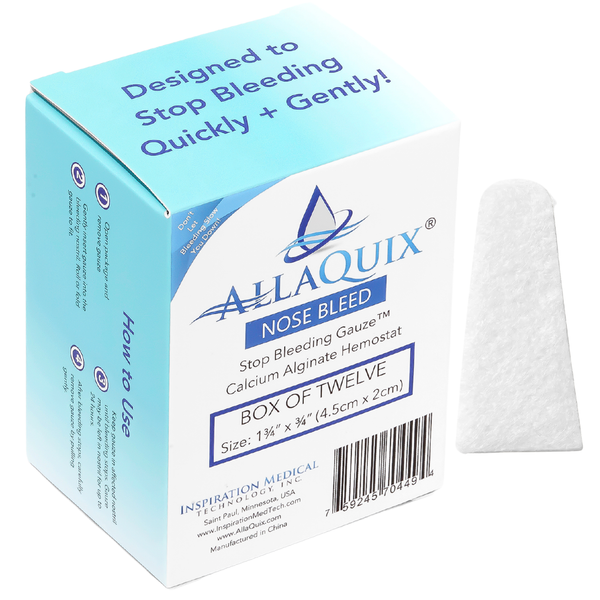
AllaQuix® Nose Bleed is a plant-based, hypoallergenic calcium alginate nose plug with Thin-Sorbent™ technology. Being plant-based and hypoallergenic makes it a considerate option for sensitive noses, and the calcium alginate material is the same family of dressing used across wound care. You can learn more about the material in the calcium alginate dressings explained guide.
Why Calcium Alginate for Noses
- Absorbs fluid and forms a gentle gel that maintains contact.
- Releases calcium that supports the clotting process.
- Plant-based and hypoallergenic, which suits sensitive tissue.
- Designed to be removed without disturbing a fresh clot.
Who Benefits Most From Nosebleed Plugs
The people who benefit most from nosebleed plugs are those who get frequent or hard-to-stop nosebleeds, including children, seniors, and people taking blood thinners. For these groups, a plug provides consistent pressure that a shaky hand or a busy household cannot always maintain for the full time a bleed needs.
Kids
Children get nosebleeds often from dry air, nose-picking, and minor bumps. A plug holds steady pressure that a young child cannot maintain by pinching, which can make stopping a bleed less stressful for everyone.
Seniors
Older adults have more fragile nasal vessels and drier tissue, so nosebleeds can be more frequent and slower to stop. A plug delivers reliable pressure without requiring a firm, sustained pinch.
Blood Thinner Users
People on medications like Eliquis, Xarelto, or warfarin bleed longer because their clotting is slowed, so a nosebleed can drag on. A plug provides continuous pressure over the extra time these bleeds often need. For more on managing bleeds while on these medications, see the ultimate guide to blood thinners and nuisance bleeding.
How to Use a Nose Plug Correctly
To use a nose plug correctly, first try pinching the soft part of the nose while leaning forward, and if that is not enough, insert the plug into the bleeding nostril and hold gentle pressure so it can work. Following the right sequence gives you the best chance of stopping the bleed quickly.
Step-by-Step
- Sit up and lean slightly forward so blood does not run down your throat.
- Pinch the soft part of the nose just below the bony bridge for 10 to 15 minutes.
- If bleeding continues, gently insert the calcium alginate plug into the affected nostril.
- Apply light pressure over the nostril and keep leaning forward.
- Leave the plug in place for the time recommended in the product instructions.
- Remove it gently, following the instructions, to avoid disturbing the clot.
The MedlinePlus nosebleed guide reinforces leaning forward and applying pressure rather than tilting the head back. Explore the AllaQuix Nose Bleed collection to find the right plug for your household.
When to See a Doctor for Nosebleeds
You should see a doctor for a nosebleed that will not stop after 15 to 20 minutes of proper pressure, that is very heavy, or that keeps coming back. Recurrent or severe nosebleeds can point to an underlying issue that an ear, nose, and throat specialist should evaluate.
- Bleeding that does not stop after 15 to 20 minutes of pressure.
- Very heavy bleeding or difficulty breathing.
- Frequent, repeated nosebleeds over days or weeks.
- Nosebleeds after a head injury or a fall.
- Feeling faint, dizzy, or weak.
Frequently Asked Questions
Do nosebleed plugs actually work better than tissue?
Yes, a purpose-made nasal plug generally works better than wadded tissue because it applies steady, even pressure at the bleed site and, in the case of calcium alginate, supports clotting as it absorbs blood. Tissue can stick to a clot and restart the bleed when removed.
How do calcium alginate nose plugs stop bleeding?
Calcium alginate nose plugs absorb blood and form a soft gel while releasing calcium that supports the clotting process, all while holding pressure against the bleeding vessel. AllaQuix Nose Bleed is a plant-based, hypoallergenic calcium alginate plug with Thin-Sorbent technology.
Are nosebleed plugs safe for children and seniors?
Nasal plugs can be helpful for children and seniors because they hold steady pressure that these groups may struggle to maintain by pinching. Use the correct size, follow the product instructions, and see a doctor for heavy or repeated nosebleeds, especially in young children.
Can I use a nose plug if I take a blood thinner?
Yes, many people on blood thinners use nasal plugs for the longer bleeds these medications can cause, because a plug provides continuous pressure over the extra time needed. Do not stop your prescribed blood thinner, and seek care if a bleed will not stop.
How long should I leave a nosebleed plug in?
Follow the time stated in the product instructions, and remove the plug gently so you do not disturb the clot. If bleeding restarts after removal or continues past 15 to 20 minutes of pressure, contact a healthcare professional.
Take the Next Step
Nosebleed plugs work by combining steady pressure with clot support, and calcium alginate does both gently. AllaQuix Nose Bleed is a plant-based, hypoallergenic calcium alginate nose plug with Thin-Sorbent technology, designed for kids, seniors, and blood thinner users alike. Explore the AllaQuix Nose Bleed collection to keep one ready at home.
Medical disclaimer: This article is for general informational purposes only and is not medical advice. It does not replace evaluation, diagnosis, or treatment by a qualified healthcare professional. Seek medical care for a nosebleed that will not stop, is very heavy, follows an injury, or keeps recurring.