
Frequent Nosebleeds: Home Treatment
Calcium alginate nasal plugs that help stop a nuisance nosebleed when pressure alone is slow to work. Sized for nasal use, safe for adults and kids, and suitable for people on blood thinners.

BUILT FOR THIS SITUATION
Stop nose bleeds quickly
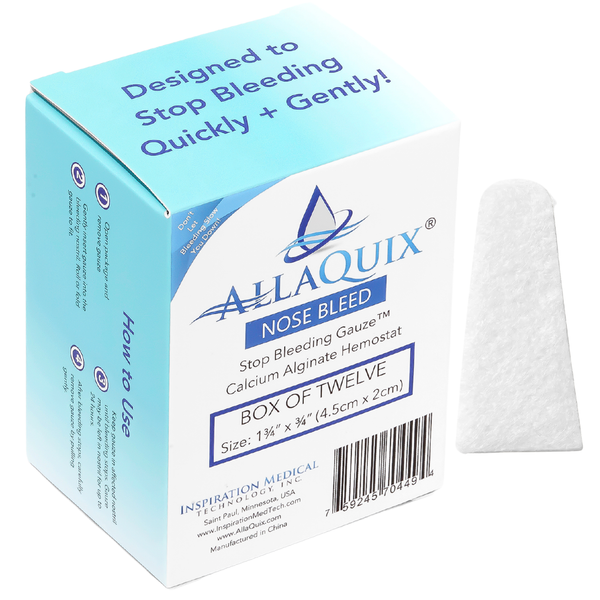
FOR HOMES
AllaQuix® Nose Bleed (Box of 12)
Twelve calcium alginate nasal plugs. The household pack size. Each plug stays sealed in an individual pouch until you need it.
Best for: home first-aid drawer
FDA reviewed and cleared
For OTC use without a prescription.
Calcium alginate
Plant-based, derived from seaweed; gels on contact to help seal the bleed.
What is Calcium Alginate →Made for nuisance bleeds
For people who normally have trouble stopping bleeding.
No prescription needed
Stock at home — no doctor visit required.
Why some people get the same nosebleed twice in a row
Recurring nosebleeds usually start from the same little spot — an exposed blood vessel on the front part of the nasal septum called Kiesselbach's plexus. Dry air, allergies, decongestant sprays, blood thinners, and even nose blowing can re-open that same vessel within minutes of the first bleed stopping.
The first-line fix is the same as for any nosebleed: sit upright, lean slightly forward, and pinch the soft part of the nose for a full 10 minutes without releasing. If that doesn't work, or if the nosebleed comes back twice in a row, a calcium alginate nasal plug gives the wound something to clot against and helps the spot seal so it doesn't restart.
When to keep nasal plugs on hand
- You get nosebleeds more than once a month
- Someone in your house takes a blood thinner
- Dry winter air or seasonal allergies trigger them
- You play contact sports or have kids who do
- You have a bleeding disorder like hemophilia or VWD
HOW TO STOP A NOSEBLEED
The four-step routine that works
Sit up, lean forward
Lean slightly forward so blood doesn't run down your throat. Don't lie back. Breathe through your mouth and stay calm.
Pinch the soft part for 10 minutes
Pinch just below the bridge for a full 10 minutes without releasing to check. Set a timer. Most nosebleeds stop here.
Insert an AllaQuix® plug if it doesn't stop
If pressure alone doesn't do it, gently insert an AllaQuix® Nose Bleed plug into the bleeding nostril and hold light pressure.
Don't blow your nose for 12 hours
Avoid hot drinks, heavy lifting, and nose-blowing for at least 12 hours to keep the clot in place. Call your doctor if it keeps coming back.
READY WHEN YOU ARE
Keep them before you need them
FOR HOMES
AllaQuix® Nose Bleed (Box of 12)
Twelve calcium alginate nasal plugs. The household pack size. Each plug stays sealed in an individual pouch until you need it.
Best for: home first-aid drawer
FAQ
Common questions
Why do I keep getting nosebleeds?
Most recurring nosebleeds come from the same exposed blood vessel near the front of the nasal septum. Dry air, allergies, decongestant sprays, blood thinners, and even normal nose blowing can re-open that same vessel within minutes of the first bleed stopping. If you get more than one nosebleed per month, or if any single nosebleed won't stop after 20 minutes of pressure, call your doctor to talk about cauterization or other long-term options.
Are AllaQuix® Nose Bleed plugs safe for kids?
AllaQuix® Nose Bleed plugs are made from calcium alginate, a plant-based material, and are designed for nasal use in adults and children. For young children, have an adult insert the plug and supervise. For minor nuisance nosebleeds only — call your pediatrician if your child gets frequent or heavy nosebleeds.
Can I use a nasal plug if I'm on a blood thinner?
Yes. Calcium alginate nasal plugs are well suited to people on blood thinners who get nuisance nosebleeds, because they give the wound something to clot against and help the spot seal. Use the standard routine first — sit up, lean forward, pinch for 10 minutes — and insert a plug if pressure alone is slow to work.
How long do I leave an AllaQuix® Nose Bleed plug in?
Leave the plug in place until the bleeding has fully stopped and the area has had time to seal, then remove it gently. Avoid blowing your nose, hot drinks, and heavy lifting for at least 12 hours so you don't dislodge the clot. Follow the package Instructions for Use.
What's the difference between AllaQuix® Nose Bleed and a regular tampon-style nasal pack?
Traditional nasal packing is a passive plug that applies pressure and absorbs. AllaQuix® Nose Bleed uses calcium alginate, a hemostatic material that helps the wound clot rather than just soaking it up, and it's sized and shaped for easy at-home insertion and gentle removal.
Are nosebleeds dangerous?
Most nosebleeds are harmless nuisance bleeds from the front of the nose and stop with pressure. Seek medical care if a nosebleed won't stop after 20 minutes of steady pressure, is very heavy, follows an injury, or recurs frequently — your doctor can discuss cauterization or other long-term options.
Try AllaQuix® before you need it
Not for emergency, arterial, or severe bleeding. Patient education, not medical advice.
EXPLORE OTHER SITUATIONS
Find your situation
Dallas, Texas
FDA reviewed and cleared. Nearly one million AllaQuix® sold.