Does Eliquis Make Cuts Bleed Longer? What to Know
Does Eliquis make cuts bleed longer? Yes, and that is expected. Eliquis, the brand name for apixaban, is a blood thinner that slows the body's clotting process to lower the risk of dangerous clots and strokes, so minor cuts and scrapes often bleed longer than they used to. This article explains why anticoagulants like Eliquis and Xarelto prolong bleeding, how to manage everyday nuisance bleeds at home, and what to keep in your medicine cabinet.
Why Eliquis Makes Cuts Bleed Longer
Eliquis makes cuts bleed longer because apixaban blocks a specific clotting factor, called Factor Xa, that your body normally uses to form a clot quickly. By slowing that step, Eliquis reduces the risk of harmful blood clots, but the same action means a small cut takes more time to seal. According to MedlinePlus, apixaban can cause bleeding that may be serious, so easy bruising and longer bleeding are known effects to expect.
Other Blood Thinners That Do the Same Thing
- Xarelto (rivaroxaban), another Factor Xa inhibitor.
- Warfarin (Coumadin), which interferes with vitamin K clotting factors.
- Pradaxa (dabigatran), a direct thrombin inhibitor.
- Antiplatelet medicines such as aspirin and clopidogrel, which affect platelets.
Each of these works a little differently, but the practical result is similar: bleeds take longer to stop. For a broader overview, see the ultimate guide to blood thinners and nuisance bleeding.
What Counts as a Nuisance Bleed
A nuisance bleed is a minor, non-life-threatening bleed that is annoying and slow to stop rather than dangerous, such as a shaving nick, a small kitchen cut, a scraped knuckle, or a minor nosebleed. For people on Eliquis, these small bleeds are the most common frustration, because they can take several extra minutes of pressure to control.
Common Nuisance Bleeds on Blood Thinners
- Razor cuts and shaving nicks.
- Small cuts from cooking or gardening.
- Scrapes and skin tears, especially on thin or aging skin.
- Minor nosebleeds.
- Bleeding gums after brushing or flossing.
How to Stop a Nuisance Bleed at Home
To stop a nuisance bleed at home while on Eliquis, apply firm, steady, direct pressure to the wound and hold it continuously without peeking, because lifting the pressure to check restarts the process. Most minor bleeds respond to sustained pressure, though they may need longer than you are used to. The American Red Cross emphasizes firm, direct pressure as the first response to external bleeding.
Step-by-Step for a Minor Cut
- Wash your hands and, if needed, rinse the cut with clean water.
- Cover the wound with a clean pad or hemostatic gauze.
- Press firmly and hold steady pressure for at least 10 to 15 minutes.
- Resist the urge to lift the pad to check, which can restart bleeding.
- Once bleeding stops, cover with a clean bandage and avoid disturbing the clot.
What to Keep in Your Medicine Cabinet
People on Eliquis benefit from stocking a few supplies ahead of time so a nuisance bleed does not turn into a stressful scramble. A ready kit turns a longer bleed into a manageable one.
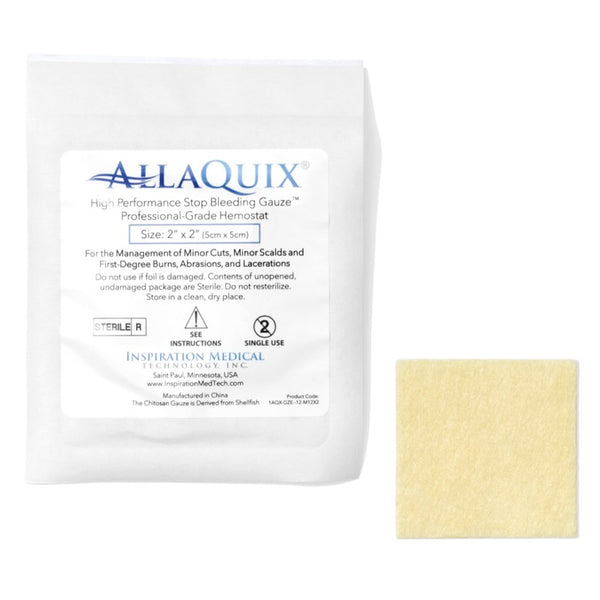
- A medical-grade hemostatic gauze for cuts that are slow to stop.
- Clean gauze pads and adhesive bandages in several sizes.
- A self-adherent wrap to hold pressure hands-free.
- Calcium alginate dressings for gentle care of scrapes and skin tears.
- A nasal plug or hemostatic option for nosebleeds.
AllaQuix® High Performance gauze is built for exactly this situation. It is FDA reviewed and cleared and is built on the same chitosan technology used by the U.S. Military, and because chitosan works independently of the clotting cascade, it is designed to help control bleeding even for people whose clotting is slowed by medication. Keep the AllaQuix High Performance stop bleeding gauze in your kit as a dependable tool.
Why Chitosan Matters for Blood Thinner Users
Chitosan works independently of the clotting cascade, which is meaningful for people on Eliquis because the medication slows that very cascade. Instead of relying on the clotting steps the drug interferes with, chitosan-based gauze acts on contact with blood, giving blood thinner users an extra layer of help for nuisance bleeds.
When a Bleed Is No Longer a Nuisance
A bleed stops being a nuisance and becomes an emergency when it will not stop despite prolonged pressure, is spurting or heavy, or comes with signs of internal bleeding. Anyone on Eliquis should know these warning signs and act quickly.
- Bleeding that does not stop after 15 to 20 minutes of firm pressure.
- Blood that is spurting or soaking through dressings rapidly.
- A deep or gaping wound that may need stitches.
- Coughing or vomiting blood, or blood in urine or stool.
- Severe headache, dizziness, weakness, or unusual bruising.
Call emergency services for heavy bleeding or any sign of internal bleeding. Do not stop taking a prescribed blood thinner on your own, because stopping suddenly can raise the risk of a dangerous clot. Talk with your doctor about any bleeding concerns.
Frequently Asked Questions
Does Eliquis really make cuts bleed longer than normal?
Yes. Eliquis, or apixaban, slows the clotting process to prevent dangerous clots, so minor cuts commonly take longer to stop bleeding. This is an expected effect of the medication, and firm, sustained pressure is usually enough for minor bleeds.
How long should I press on a cut if I take Eliquis?
Hold firm, steady pressure for at least 10 to 15 minutes without lifting to check. Bleeds on blood thinners often need longer than you expect, so give it continuous time. If bleeding continues past 15 to 20 minutes, seek medical care.
What is the best thing to keep at home for bleeding on blood thinners?
A medical-grade hemostatic gauze is a helpful item to keep on hand, along with clean gauze pads, bandages, and a self-adherent wrap. AllaQuix High Performance gauze uses chitosan, which works independently of the clotting cascade, making it useful for people whose clotting is slowed by medication.
Can I stop taking Eliquis so my cuts stop bleeding so long?
No, do not stop a prescribed blood thinner on your own. Stopping suddenly can raise your risk of a serious clot or stroke. If longer bleeding is bothering you, talk with your doctor about your concerns and management options.
Is easy bruising on Eliquis something to worry about?
Easy bruising is a common effect of Eliquis and is usually not dangerous. However, large, unexplained bruises, or bruising along with other bleeding signs, should be discussed with your doctor, who can determine whether further evaluation is needed.
Take the Next Step
If you or a loved one takes Eliquis or another blood thinner, being prepared makes nuisance bleeds far less stressful. AllaQuix High Performance gauze is FDA reviewed and cleared and built on the same chitosan technology used by the U.S. Military, giving you a dependable tool for slow-to-stop bleeds. Add the AllaQuix High Performance stop bleeding gauze to your medicine cabinet today.
Medical disclaimer: This article is for general informational purposes only and is not medical advice. It does not replace evaluation, diagnosis, or treatment by a qualified healthcare professional. Never stop or change a prescribed medication without consulting your doctor, and seek emergency care for heavy bleeding or signs of internal bleeding.