How Tight Should a Pressure Bandage Be?
How tight should a pressure bandage be? A pressure bandage should be snug enough to control bleeding but never so tight that it cuts off circulation, and the classic two-finger rule is the simplest way to judge it. A well-applied pressure bandage supports a clot and keeps a dressing in place, while a bandage that is too tight can damage tissue and restrict blood flow. This guide covers the two-finger rule, circulation warning signs, how to layer hemostatic dressings, and wrap technique by body part.
The Two-Finger Rule Explained
The two-finger rule means a pressure bandage is applied correctly when you can just slide two fingers underneath the edge of the wrap without it feeling loose. This level of snugness applies enough force to help control bleeding and hold the dressing firmly, while still leaving room for blood to circulate to the tissue beyond the bandage. If you cannot fit two fingers under the wrap, it is too tight, and if it slides freely or shifts, it is too loose.
Signs Your Bandage Is Just Right
- You can slide two fingers under the edge with slight resistance.
- Bleeding slows or stops with steady, even pressure.
- The dressing stays in place without sliding.
- The skin and nails beyond the wrap stay a normal color.
Circulation Warning Signs to Watch For
Circulation warning signs mean a pressure bandage is too tight and must be loosened right away to protect the limb, and they include numbness, tingling, coolness, paleness, or a bluish color below the bandage. Because a wrap can feel fine at first and tighten as swelling develops, you should check the area beyond the bandage regularly. The American Red Cross notes that a bandage which is too tight can cut off circulation.
Loosen the Bandage Immediately If You Notice
- Numbness or tingling below the bandage.
- Fingers or toes that turn pale, white, or blue.
- Skin that feels cold to the touch beyond the wrap.
- Throbbing pain that increases after wrapping.
- Slow capillary refill, meaning color returns slowly after you press a nail bed.
A pressure bandage is not a tourniquet. A pressure wrap controls bleeding while keeping circulation intact, while a tourniquet is a last-resort tool for life-threatening limb bleeding that deliberately stops all blood flow.
How to Layer a Hemostatic Dressing Under a Pressure Wrap
To layer a hemostatic dressing under a pressure wrap, place the hemostatic gauze directly against the bleeding wound, cover it with a clean absorbent pad, and then apply the wrap firmly over the top to hold everything in place. This combination puts the clotting material where it is needed and uses the wrap to maintain steady pressure hands-free.
Step-by-Step Layering
- Pack or cover the wound directly with a hemostatic gauze.
- Hold firm manual pressure for several minutes to start clot formation.
- Place a clean absorbent pad over the hemostatic gauze.
- Wrap firmly with a self-adherent bandage using the two-finger rule.
- Check circulation beyond the wrap and recheck it periodically.
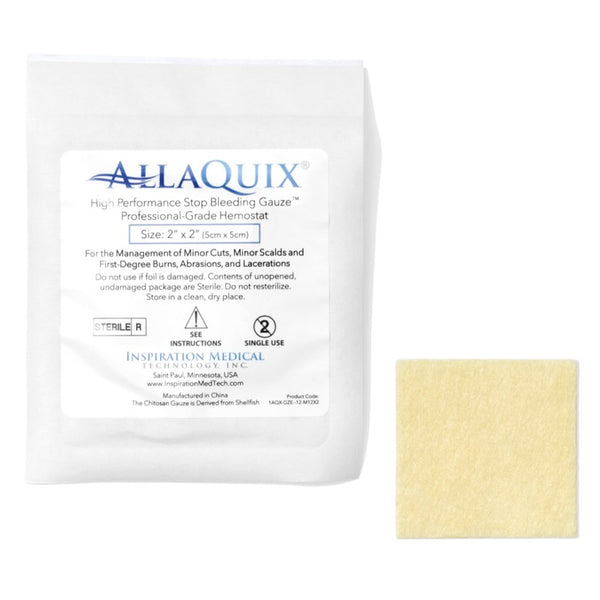
AllaQuix® High Performance gauze pairs well with a pressure wrap because it is FDA reviewed and cleared and built on the same chitosan technology used by the U.S. Military, and chitosan works independently of the clotting cascade. For a hands-free hold, the Wrapid self-stick foam wrap sticks to itself without clips or pins, and you can add the AllaQuix High Performance stop bleeding gauze underneath for stubborn bleeds.
Wrap Technique by Body Part
Correct wrap technique depends on the body part, but the shared rule is to start below the wound and wrap upward toward the heart, overlapping each pass by about half the width of the bandage. Wrapping from distal to proximal, meaning from the point farthest from the heart toward the body, supports circulation and even pressure.
Arm and Forearm
Start at the wrist or below the wound and wrap upward toward the elbow, overlapping each turn. Keep the hand and fingers exposed so you can monitor color and warmth.
Hand and Finger
Use a narrower wrap and figure-eight turns to hold a dressing without over-tightening a small area. Leave the fingertip visible when possible so you can check circulation.
Leg and Calf
Begin at the ankle or below the wound and wrap upward toward the knee. Larger muscles tolerate a firm wrap, but continue to check the toes.
Knee and Elbow
Use figure-eight turns across the joint so the wrap flexes with movement rather than bunching or slipping.
Common Pressure Bandage Mistakes
The most common pressure bandage mistakes are wrapping too tightly, wrapping unevenly, and failing to recheck circulation as swelling develops. Avoiding these keeps a pressure wrap both safe and effective.
- Wrapping so tightly that you cannot fit two fingers under the edge.
- Starting above the wound instead of below it.
- Leaving gaps or wrapping unevenly, which creates pressure points.
- Covering fingers or toes so you cannot monitor circulation.
- Forgetting to loosen the wrap when swelling increases.
- Using a pressure wrap when a tourniquet is truly needed for life-threatening bleeding.
Frequently Asked Questions
How tight should a pressure bandage be without cutting off circulation?
Snug enough to slow or stop bleeding but loose enough to slide two fingers under the edge. That two-finger rule keeps the wrap effective while allowing blood to reach the tissue beyond it. If you cannot fit two fingers, loosen it.
What is the two-finger rule for a pressure bandage?
The two-finger rule means the wrap is correctly applied when you can just slide two fingers under its edge with slight resistance. It is a quick way to confirm the bandage is firm enough to control bleeding without being dangerously tight.
How do I know if my pressure bandage is too tight?
Look for numbness, tingling, coolness, pain, or pale or bluish skin below the bandage, and check that color returns quickly after pressing a nail bed. Any of these signs means the wrap is too tight and should be loosened immediately.
Can I put hemostatic gauze under a pressure wrap?
Yes. Place the hemostatic gauze directly on the wound, cover it with an absorbent pad, and wrap firmly over the top. This puts the clotting material against the bleeding source while the wrap maintains steady pressure. AllaQuix High Performance gauze is designed for this use.
Is a pressure bandage the same as a tourniquet?
No. A pressure bandage controls bleeding while keeping circulation intact, whereas a tourniquet is a last resort for life-threatening limb bleeding and intentionally stops all blood flow. Do not use a pressure wrap as a substitute for a tourniquet in a true emergency.
Take the Next Step
A good pressure wrap and a reliable hemostatic gauze belong in every first aid kit. The AllaQuix self-adherent pressure wrap holds a dressing hands-free, and AllaQuix High Performance gauze adds chitosan technology for stubborn bleeds. Explore the Wrapid self-stick foam wrap and pair it with the gauze to be ready when it counts.
Medical disclaimer: This article is for general informational purposes only and is not medical advice. It does not replace evaluation, diagnosis, or treatment by a qualified healthcare professional. For life-threatening bleeding, call emergency services and follow trained first aid protocols.