How to Stop Dialysis Fistula Bleeding at Home Safely
If a dialysis access site is bleeding heavily, is spurting, or will not stop, call 911 now, apply firm direct pressure, and do not wait. Learning how to stop dialysis fistula bleeding at home is important for patients and caregivers, but a fistula or graft bleed can become life-threatening within minutes. This guide from the AllaQuix® team puts emergency steps first, then covers a gentle pressure protocol and the role of hemostatic dressings.
When dialysis fistula bleeding is an emergency
Dialysis fistula bleeding is a medical emergency whenever blood is spurting, pulsing, or soaking through dressings, when bleeding does not slow after about 10 minutes of firm pressure, or when the person feels faint, so in those situations call 911 immediately and keep pressing. A fistula or graft carries high-pressure blood flow, and a rupture can cause severe blood loss fast.
The American Kidney Fund explains that access-site bleeds can be dangerous and must be taken seriously, with guidance available at kidneyfund.org. When in doubt, treat it as an emergency and get help.
Call 911 right away if you see
- Blood spurting or pulsing from the access site.
- Bleeding that will not stop with firm pressure.
- Dressings soaking through quickly.
- Dizziness, confusion, pale skin, or fainting.
- A sudden change in how the fistula looks or feels.
Why dialysis access bleeding is different
Dialysis access bleeding is different from an ordinary cut because a fistula or graft carries fast, high-pressure arterial flow, and many patients receive heparin during hemodialysis, a medicine that reduces clotting to keep the dialysis circuit open. That combination means an access-site bleed can be faster and harder to control than a routine scrape.
Heparin is a common anticoagulant used during hemodialysis, and its clot-slowing effect can persist for a period after treatment, which is one reason post-dialysis needle sites sometimes bleed longer. Because of this, patients and caregivers should have a clear, practiced plan and should never treat a serious access bleed casually.
A gentle pressure protocol
The core method to control a dialysis access bleed at home is firm, direct, steady pressure over the bleeding point using a clean pad, held without repeatedly lifting for at least 10 minutes, because releasing early breaks the forming seal and restarts the flow. Kidney Care UK outlines a similar pressure-first approach at kidneycareuk.org.
A careful, safety-first sequence:
- Stay calm and sit down if possible.
- Place a clean pad or dressing directly over the bleeding point.
- Press firmly with two fingers right on the spot, not around it.
- Hold steady pressure and do not peek for at least 10 minutes.
- If bleeding soaks through, add another pad on top and keep pressing.
- If it does not stop, is spurting, or you feel unwell, call 911.
Do not use a tight tourniquet-style wrap around a fistula limb unless a medical professional has specifically trained you to, and follow the exact instructions your dialysis center has given you.
Important cautions
Avoid pressing so hard for so long that you stop the fistula's thrill, the gentle buzzing flow you can normally feel, for an extended time, and follow your care team's guidance on this. If you are ever unsure whether a bleed is under control, escalate to emergency care rather than waiting.
The role of hemostatic dressings
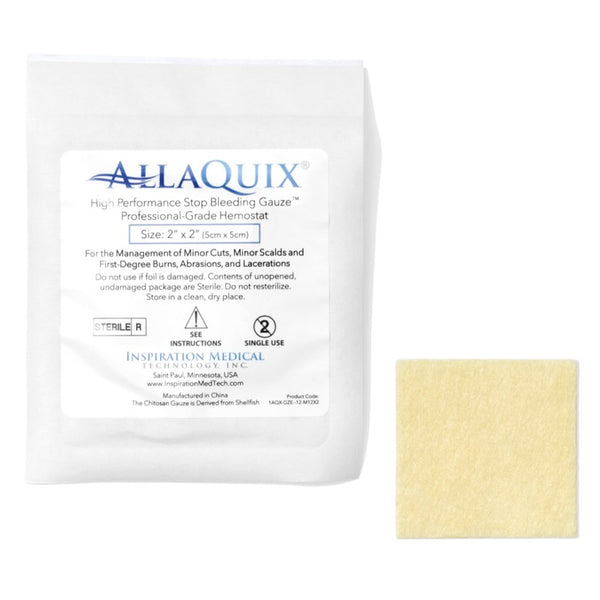
Hemostatic dressings can support the pressure step for minor access-site oozing, because a chitosan dressing works independently of the clotting cascade, and AllaQuix® High Performance gauze is FDA reviewed and cleared and built on the same chitosan technology used by the U.S. Military. A dressing is a supplement to firm pressure and emergency care, never a replacement for calling 911 during a serious bleed.
Because chitosan does not rely on the same clotting factors that heparin reduces, it can help form a seal under pressure even when clotting is slowed. This is why some dialysis patients and caregivers keep a chitosan dressing in their home kit, alongside a clear emergency plan.
How to think about it safely
- Firm, direct pressure is always the first and most important step.
- A hemostatic dressing supports pressure, it does not replace it.
- A serious, fast, or spurting bleed is a 911 emergency, full stop.
- Ask your dialysis care team before changing your bleeding routine.
You can review the science on the science of AllaQuix page and see dressing details on the AllaQuix High Performance stop bleeding gauze page. Bring these products up with your nephrology or dialysis team so they fit your personal plan.
Preventing access-site bleeds
Preventing dialysis access bleeds starts with careful needle-site aftercare, gentle handling of the access limb, and knowing your own warning signs, because many bleeds can be reduced by protecting the site and responding early. Your dialysis center is the best source for a plan tailored to you.
Helpful habits many patients follow, always guided by their care team:
- Hold post-dialysis needle sites for the full recommended time.
- Avoid heavy lifting or pressure on the access arm.
- Keep the skin over the access clean and moisturized as advised.
- Watch for scabs that sit high, thin skin, or oozing between sessions.
- Report any concerning changes to your care team promptly.
Frequently asked questions
How do I stop dialysis fistula bleeding at home?
Place a clean pad directly on the bleeding point and press firmly with steady pressure for at least 10 minutes without lifting. If bleeding is spurting, soaks through, will not stop, or you feel faint, call 911 immediately and keep pressing.
When is a fistula bleed an emergency?
A fistula bleed is an emergency when blood spurts or pulses, when it does not stop after about 10 minutes of firm pressure, when dressings soak through fast, or when the person feels dizzy or faint. In those cases call 911 right away.
Why does my access site bleed so long after dialysis?
Many patients receive heparin during hemodialysis, an anticoagulant that reduces clotting to keep the circuit open, and its effect can linger for a period afterward. That is one reason needle sites sometimes ooze longer, so hold pressure for the full recommended time.
Can a hemostatic dressing help with fistula bleeding?
A chitosan hemostatic dressing can support the pressure step for minor oozing because it works independently of the clotting cascade. It is not a substitute for firm pressure or emergency care, so call 911 for any serious or fast bleed and follow your care team's plan.
Should I use a tourniquet on a bleeding fistula?
Do not apply a tight tourniquet-style wrap around a fistula limb unless a medical professional has specifically trained you to do so. The standard home step is firm, direct pressure on the bleeding point while you get emergency help if needed.
A dialysis access bleed deserves a calm, practiced, safety-first response, with firm pressure and 911 as your anchors and a hemostatic dressing as a supporting tool. To prepare a home kit thoughtfully with your care team, review the AllaQuix High Performance stop bleeding gauze and build a plan you can trust before you ever need it.
Medical disclaimer: This article is for general educational purposes only and is not medical advice. It does not replace evaluation, diagnosis, or treatment by a qualified healthcare professional. Dialysis access bleeding can be life-threatening. For any serious, fast, spurting, or uncontrolled bleed, apply firm pressure and call 911 immediately. Always follow the specific instructions of your dialysis center and nephrology care team, and follow product directions.