
What Causes Nosebleeds?
The everyday triggers behind most nosebleeds, whether stress plays a part, and when frequent nosebleeds are worth a doctor's visit.
Reviewed by Inspiration Medical Technology, Inc. All articles are reviewed for accuracy and brand-voice compliance by the team behind AllaQuix®. Not a substitute for medical advice from your doctor.
Why the nose bleeds so easily
The inside of your nose is lined with a thin, moist membrane packed with small blood vessels. Near the front, on the wall between your nostrils (the septum), several of those vessels meet just under the surface. Doctors call this spot Kiesselbach's area, and it's where most nosebleeds begin.
Because that lining is thin and those vessels are close to the surface, it doesn't take much to break one: dry air that cracks the lining, a sneeze, a rub, or a scratch. These front-of-the-nose bleeds usually come from one nostril and respond well to firm pressure at home.
Less often, bleeding starts further back in the nose. These bleeds are more common in older adults, can run down the back of the throat even when you lean forward, and usually need a clinician.
The most common causes of nosebleeds
Most nosebleeds have one of a handful of everyday triggers, and often two of them at once, like a winter cold in a heated house.
Common triggers
- Dry air. Indoor heating, air conditioning, dry climates and airplane cabins dry out the lining until it cracks. This is why nosebleeds peak in winter.
- Nose picking and rubbing. The most common cause in children, and more common in adults than most people admit.
- Colds, allergies and sinus infections. An inflamed lining bleeds more easily, and frequent nose blowing adds to it.
- Nasal sprays. Steroid sprays aimed at the septum, and overuse of decongestant sprays, can irritate the lining.
- Minor injuries. A bump to the nose during sports or play.
- Blood thinners and antiplatelets. Medicines like warfarin, apixaban, rivaroxaban, clopidogrel and daily aspirin don't start a nosebleed, but they can make one last longer.
FOR THE NIGHTSTAND AND THE BAG
Keep a nosebleed plug where nosebleeds happen
Calcium alginate plugs that gel in the nostril and absorb up to 20 times their weight.
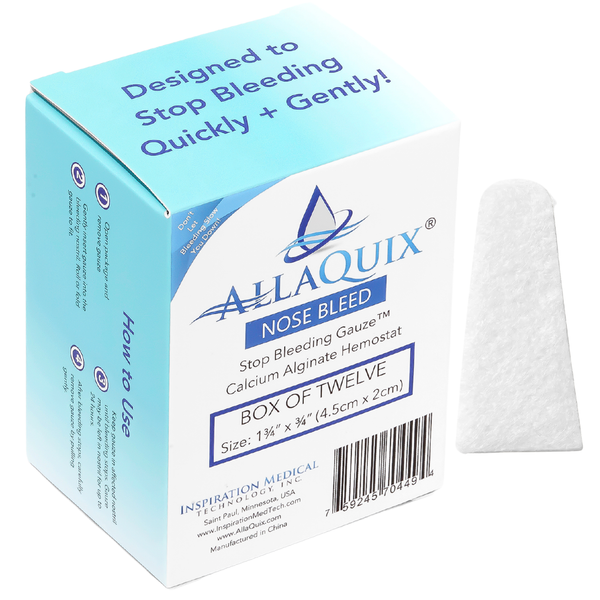
CALCIUM ALGINATE PLUGS
AllaQuix® Nose Bleed Plugs
Soft, thin calcium alginate plugs that gel in the nostril and help stop nosebleeds quick. Sterile, latex-free and individually wrapped. Box of 12.
Best for: recurring nosebleeds, kids and adults, people on blood thinners
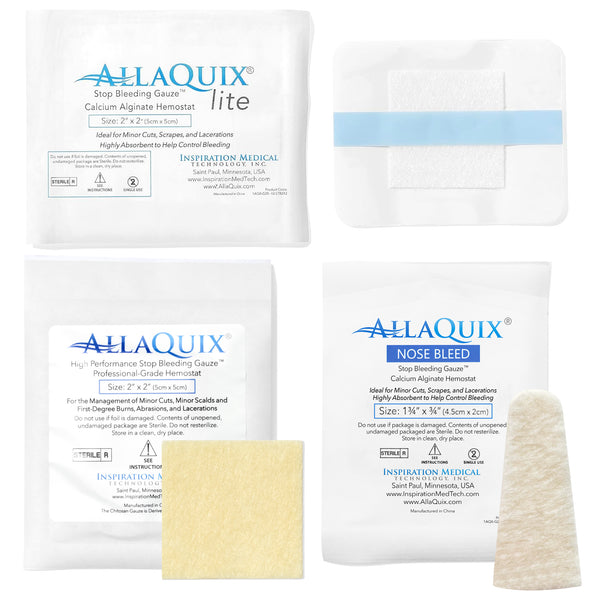
TRY ALL THREE
AllaQuix® Variety Pack
One Nose Bleed plug, one Lite adhesive bandage and one High Performance gauze, each sterile and individually wrapped. The easy way to try AllaQuix®.
Best for: first-time buyers, school and travel bags
Less common causes worth knowing
A small share of recurring nosebleeds has another cause behind it. These are uncommon, but they're the reason frequent nosebleeds deserve a conversation with a doctor.
Less common causes
- Inherited bleeding disorders such as von Willebrand disease or hemophilia
- Hereditary hemorrhagic telangiectasia (HHT), which often runs in families and can cause small red spots on the lips or fingertips
- Liver or kidney disease, which can affect clotting
- A deviated septum, which exposes one side to more drying airflow
- Nasal polyps or, rarely, a growth in the nose, usually with a blocked nostril on the same side
Can stress cause nosebleeds?
Research hasn't shown that stress on its own causes nosebleeds. The connection most people notice is indirect. Stressful stretches often come with habits that do irritate the nose, like rubbing or picking, and with colds, poor sleep and dry indoor air.
High blood pressure is a related question. Studies haven't settled whether it causes nosebleeds, but it's linked with bleeds that are harder to stop. If you get frequent nosebleeds and haven't had your blood pressure checked recently, it's worth doing.
What frequent nosebleeds can be a sign of
Most people who get frequent nosebleeds have a dry or irritated nasal lining, allergies, or a medication effect. A small number have something else going on. See your doctor if any of these apply:
Worth a doctor's visit
- Nosebleeds more than once a week, or clusters that keep coming back
- Bleeding that's always from the same nostril, especially with a blocked nose on that side
- Easy bruising, bleeding gums, or cuts that take a long time to stop
- A family history of bleeding disorders or HHT
- Nosebleeds that started after a new medication or supplement
An ear, nose and throat specialist can often find the exact vessel and treat it.
How to make nosebleeds less likely
Most prevention comes down to keeping the lining moist and leaving it alone.
Simple habits that help
- Run a humidifier in the bedroom during the heating season
- Use a saline spray or gel once or twice a day
- Apply a thin layer of petroleum jelly just inside the nostril at bedtime
- Keep children's nails short
- Blow your nose gently, one side at a time
- Aim nasal sprays toward the outer wall of the nostril, away from the septum
What to do when a nosebleed starts
Sit up and lean slightly forward. Pinch the soft part of your nose, just below the bony bridge, and hold steady pressure for 10 to 15 minutes without letting go to check. Don't tilt your head back, which sends blood down your throat.
If the bleeding restarts once you let go, a nasal plug gives the bleed something to clot against while you rest. For the full step-by-step routine, see how to stop a nosebleed. For older adults and people on blood thinners, see when to worry about a nosebleed in older adults.
WHEN PINCHING ISN'T ENOUGH
When the bleed restarts after pressure
Soft plugs that expand gently and lift out without pulling.
CALCIUM ALGINATE PLUGS
AllaQuix® Nose Bleed Plugs
Soft, thin calcium alginate plugs that gel in the nostril and help stop nosebleeds quick. Sterile, latex-free and individually wrapped. Box of 12.
Best for: recurring nosebleeds, kids and adults, people on blood thinners
TRY ALL THREE
AllaQuix® Variety Pack
One Nose Bleed plug, one Lite adhesive bandage and one High Performance gauze, each sterile and individually wrapped. The easy way to try AllaQuix®.
Best for: first-time buyers, school and travel bags
FAQ
Common questions on this topic
Why do I get nosebleeds at night?
Dry indoor air is the usual reason. Heating and air conditioning dry the nasal lining while you sleep, and sleeping on one side can dry that side further. A bedroom humidifier and a little petroleum jelly inside the nostril at bedtime often help.
Why am I suddenly getting nosebleeds?
Common reasons are a change of season, a cold or allergy flare, a new nasal spray, or a new medication or supplement that affects clotting. If the nosebleeds keep happening for more than a couple of weeks, see your doctor.
Can high blood pressure cause nosebleeds?
Studies haven't settled whether high blood pressure causes nosebleeds, but it's linked with bleeds that are harder to stop. If nosebleeds are frequent, have your blood pressure checked.
Are nosebleeds common in children?
Very. Nosebleeds are most common between about ages 2 and 10, usually from dry air and nose picking. For a child under 2, or a child with frequent nosebleeds or easy bruising, check with the pediatrician.
Can dehydration cause nosebleeds?
Not directly, but a dry nasal lining cracks more easily, and not drinking enough can add to the dryness from indoor air. Staying hydrated and using saline helps.
BEFORE THE NEXT ONE
Keep a nosebleed plug where nosebleeds happen
Not for emergency, arterial, or severe bleeding. General patient education, not medical advice.
Dallas, Texas
FDA reviewed and cleared. Nearly one million AllaQuix® sold.