When to Use Calcium Alginate Instead of Regular Gauze
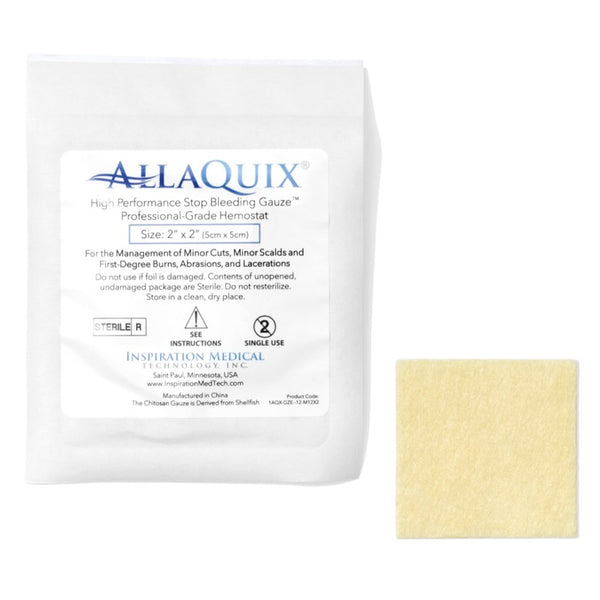
Deciding when should you use calcium alginate instead of regular gauze usually comes down to one question: how much fluid is the wound giving off. Calcium alginate is built for wetter wounds, while plain gauze is fine for dry, minor ones. This guide from the AllaQuix® team lays out a simple decision framework so you can choose with confidence, and it shows where AllaQuix Lite fits.
When should you use calcium alginate instead of regular gauze?
Calcium alginate is the better choice instead of regular gauze whenever a wound is producing a moderate to heavy amount of fluid, because calcium alginate absorbs many times its own weight and turns that fluid into a soft gel. Regular gauze is fine for small, dry, low-fluid wounds where absorption and simple coverage are all you need.
In short, match the dressing to the drainage. A weeping wound calls for high absorbency, while a dry scrape does not.
How calcium alginate works
Calcium alginate works by absorbing wound fluid and converting it into a gel that keeps the wound bed moist while wicking away excess exudate, and AllaQuix® Lite uses calcium alginate that absorbs up to 20x its weight. Alginate is a fiber derived from seaweed, and the calcium in the dressing exchanges with sodium in the fluid as the fibers swell into a conformable gel.
Clinical educators describe alginate dressings as a strong option for moderate-to-heavy drainage because of this absorb-and-gel behavior, as summarized by the Wound Care Education Institute at wcei.net.
Why the gel matters
The gel does two helpful things at once. It holds excess fluid away from the skin around the wound, and it keeps the wound surface from drying out and sticking to the dressing. That combination can make dressing changes gentler than pulling dry cotton off a healing surface.
Signs a wound needs more than plain gauze
A wound needs more than plain gauze when it stays wet, soaks through simple pads quickly, or sits in a spot where friction and moisture keep it from settling, because plain gauze can become saturated and offers no gel barrier. Watching the drainage is the clearest signal for stepping up to calcium alginate.
Consider calcium alginate when you notice:
- Frequent strike-through, where fluid soaks past the outer dressing.
- A wound that keeps weeping between changes.
- Dressings that stick and hurt to remove.
- Minor bleeding oozing alongside the fluid.
- A cavity or crease where a conforming gel helps contact.
When plain gauze is perfectly fine
Plain gauze is perfectly fine for small, dry, or lightly draining wounds, such as a shallow scrape or a minor cut that has already stopped weeping, because those wounds do not produce enough fluid to need the high absorbency of calcium alginate. Using an advanced dressing on a dry wound is simply more than the situation requires.
Reach for regular gauze or a basic adhesive pad when the wound is clean, closed or nearly closed, and staying dry between changes. Cost and simplicity favor plain gauze in those everyday cases, and there is no benefit to overdressing a minor injury.
Calcium alginate and sensitive skin
Calcium alginate can be a comfortable option for sensitive skin because calcium alginate forms a moist gel that tends to lift away more gently than dry cotton, reducing the tug on fragile skin at dressing changes. People with thin, aging, or easily irritated skin often find gentler removal valuable, since repeated trauma at changes can slow comfort and healing.
Keep in mind that alginate is designed for wounds with drainage. On a completely dry wound the gel cannot form well, so a moist-wound dressing or plain gauze may suit better. When in doubt about a chronic or non-healing wound, ask a wound care professional for a plan.
A simple decision checklist
The simplest way to choose between calcium alginate and regular gauze is to grade the drainage first, then factor in skin fragility and comfort, because the amount of exudate is the single strongest predictor of which dressing performs better. Use the quick checklist below before you dress a wound.
- Is the wound wet or weeping? Lean calcium alginate.
- Does fluid soak through fast? Choose calcium alginate for absorbency.
- Is the skin fragile or prone to tearing? Alginate's gel removal may help.
- Is the wound dry and minor? Plain gauze is fine.
- Is the wound deep, large, or not healing? See a clinician.
You can compare formats and sizes on the AllaQuix Lite calcium alginate gauze product page, or browse the full AllaQuix Lite collection to find the right fit.
Frequently asked questions
When should I use calcium alginate instead of regular gauze?
Use calcium alginate when a wound produces moderate to heavy fluid, because it absorbs many times its weight and turns fluid into a gel. Stick with regular gauze for small, dry, or lightly draining wounds where simple coverage is enough.
How much fluid can calcium alginate absorb?
AllaQuix Lite uses calcium alginate that absorbs up to 20x its weight, which is why it suits weeping wounds and frequent strike-through. That high absorbency is the main practical advantage over plain cotton gauze.
Is calcium alginate good for sensitive skin?
Calcium alginate forms a moist gel that often lifts away more gently than dry cotton, which can reduce tugging on fragile skin at dressing changes. It works best on wounds that have some drainage so the gel can form.
Can I use calcium alginate on a dry wound?
Calcium alginate needs moisture to form its gel, so it is not ideal for a completely dry wound. For dry, minor wounds, plain gauze or a basic pad is usually the simpler and better choice.
What is calcium alginate made from?
Calcium alginate is made from alginate, a natural fiber derived from seaweed, combined with calcium. When it meets wound fluid, the fibers swell and turn into a soft, conformable gel over the wound.
Choosing the right dressing is mostly about reading the drainage, and calcium alginate shines whenever a wound is on the wetter side. To keep a highly absorbent option ready for those weeping cuts and scrapes, explore the AllaQuix Lite calcium alginate gauze and match your kit to the wounds you actually see.
Medical disclaimer: This article is for general educational purposes only and is not medical advice. It does not replace evaluation, diagnosis, or treatment by a qualified healthcare professional. For deep, large, infected, or non-healing wounds, seek professional care. Always follow product directions and consult your clinician about your individual needs.