Wound Powder vs Hemostatic Gauze: An Honest Comparison
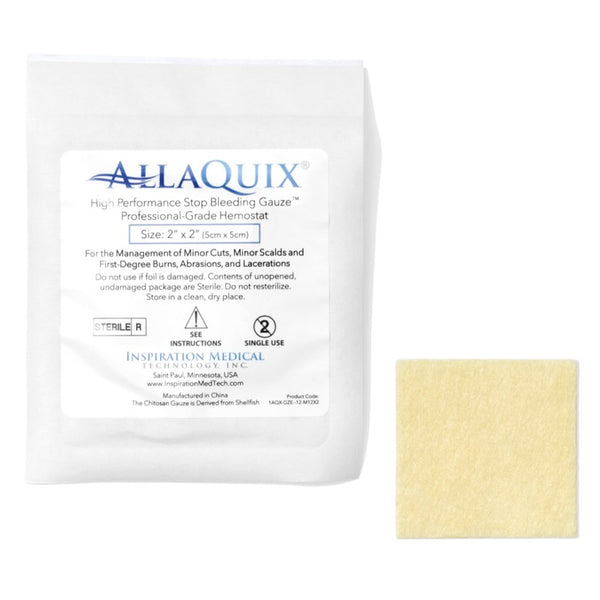
The choice of wound powder vs hemostatic gauze comes up a lot for home first-aid kits, and both formats have real fans. Clotting powders pour directly onto a wound, while hemostatic gauze such as AllaQuix® High Performance is a dressing you place and hold. This guide gives a fair, respectful comparison so you can decide what fits your household.
Wound powder vs hemostatic gauze: the quick answer
Wound powder and hemostatic gauze both aim to stop bleeding faster than plain cotton, but they differ in form and handling: wound powders are loose granules you pour onto a wound to build a scab-like seal, while hemostatic gauze is a dressing you place and press so it can be lifted and reapplied cleanly. Neither is universally better, and the right pick depends on the wound and the user.
How each format works
Wound powders and hemostatic gauze reach the same goal through different physical routes, because powders rely on granules mixing into the blood to form a localized seal, while gauze delivers its active material on a controllable carrier you can position and hold with steady pressure. Understanding that difference explains most of the trade-offs below.
AllaQuix High Performance gauze is FDA reviewed and cleared, and it is built on the same chitosan technology used by the U.S. Military. Chitosan works independently of the clotting cascade, which means the gauze adds an active, charge-driven step on top of pressure. Powders, by contrast, come in several chemistries, and each brand should be used exactly as its own directions describe.
Mess and cleanup
On mess, hemostatic gauze is generally tidier than wound powder, because gauze keeps its active material on a single pad you control, while loose powder can scatter on skin, clothing, and surfaces, especially outdoors, in wind, or when hands are shaky. For a self-contained kit, that difference is easy to feel in practice.
Powder is not necessarily wrong here, and many people use it well. It simply asks for a steadier hand and a more controlled setting. If you expect to treat wounds in awkward positions or breezy conditions, the contained format of gauze can be the calmer option.
Rebleed on removal
Rebleed risk at removal is a key difference, because a hemostatic gauze can often be lifted and reapplied as one piece, while a powder that has bonded into a scab-like seal may pull at the wound if that seal is disturbed too early. The goal with either format is to avoid breaking a fresh seal before it is ready.
With gauze, you can add a fresh dressing over the top or replace it more predictably. With a powder seal, patience matters even more, since disturbing the bonded material can restart bleeding. General wound-care guidance from resources like MedlinePlus stresses steady pressure and leaving a forming clot undisturbed, and that principle applies to both formats.
Wound visibility
Wound visibility tends to favor hemostatic gauze, because gauze sits on top of the wound and can be lifted to inspect the site, while a poured powder can coat and obscure the wound, making it harder to judge depth, debris, or whether stitches may be needed. Being able to see the injury is useful for deciding next steps.
This matters most for wounds that might need professional evaluation. If you cannot clearly see a wound because a product is caked over it, you lose information that a clinician would want. A dressing you can lift and replace keeps that window open.
Ease of use for seniors
For many seniors and caregivers, hemostatic gauze is often the easier format to use, because placing and holding a single pad requires less fine motor precision than aiming and pouring loose granules, and gauze avoids the spillage that can happen with unsteady hands. Ease of use directly affects whether a product gets applied correctly under stress.
Older adults are also more likely to take blood thinners, which makes reliable, low-fuss application valuable. A few practical points for senior-friendly kits:
- Simple steps: place, press, and hold.
- Fewer pieces to manage than measuring or pouring.
- Easy to inspect the wound between checks.
- Predictable reapplication if bleeding continues.
- Clear package directions to follow calmly.
Choosing what fits your kit
The best choice between wound powder and hemostatic gauze is the one you can use correctly and calmly when bleeding actually happens, because a controllable, easy-to-inspect format reduces mistakes for most home users, especially older adults and caregivers. Some households even keep both and reserve each for the situations it suits.
If tidiness, visibility, and gentle reapplication rank high for you, hemostatic gauze is a strong default. You can review sizes and details on the AllaQuix High Performance stop bleeding gauze page, and see the underlying science on the science of AllaQuix page.
Frequently asked questions
Is wound powder or hemostatic gauze better for home use?
Both can help control bleeding, but hemostatic gauze is often easier and tidier for home use because it stays on one controllable pad, is simple to inspect, and can be reapplied predictably. Wound powder works well too but asks for a steadier hand.
Does removing wound powder cause rebleeding?
A powder that has bonded into a scab-like seal can pull at the wound if disturbed too early, which may restart bleeding. With any hemostatic product, hold steady pressure and avoid breaking a fresh seal before it is ready.
Can I still see the wound with hemostatic gauze?
Yes. Hemostatic gauze sits on top of the wound and can be lifted to inspect the site, so you can judge depth, debris, or whether professional care is needed. Poured powder can coat and obscure the wound.
Which is easier for seniors to use?
Hemostatic gauze is often easier for seniors because placing and holding one pad needs less fine motor control than aiming and pouring loose granules, and it avoids spillage from unsteady hands. Simple, repeatable steps help under stress.
What is AllaQuix High Performance gauze made with?
AllaQuix High Performance gauze is built on chitosan, the same chitosan technology used by the U.S. Military, and it is FDA reviewed and cleared. Chitosan works independently of the clotting cascade to help form a seal under pressure.
Both wound powders and hemostatic gauze earn their place in the first-aid world, and the honest answer is that the best format is the one you will use correctly when it counts. If a tidy, easy-to-inspect, senior-friendly option appeals to you, explore the AllaQuix High Performance stop bleeding gauze and build a kit you can trust.
Medical disclaimer: This article is for general educational purposes only and is not medical advice. It does not replace evaluation, diagnosis, or treatment by a qualified healthcare professional. Brand names are mentioned for comparison only and are the property of their respective owners. For deep, large, or uncontrolled bleeding, apply pressure and call emergency services. Always follow product directions.