
How Long Do You Hold Pressure to Stop a Cut From Bleeding?
Most minor cuts stop within about 5 to 10 minutes of firm, continuous direct pressure, as long as you resist the urge to peek. The key is steady, uninterrupted pressure.
Reviewed by Inspiration Medical Technology, Inc. All articles are reviewed for accuracy and brand-voice compliance by the team behind AllaQuix®. Not a substitute for medical advice from your doctor.
How long should you hold pressure on a bleeding cut?
You should hold firm, continuous direct pressure on a bleeding cut for at least 5 to 10 minutes without lifting the dressing to check, because peeking disrupts the forming clot and restarts the bleeding. Most minor cuts stop within this window. Bleeding-control training from Stop the Bleed emphasizes constant pressure directly over the wound. (See Stop the Bleed and MedlinePlus.)
Set a timer if you can. The single most common mistake is lifting the gauze every minute to see if it worked, which is exactly what prevents it from working.
The exact direct pressure protocol, step by step
The direct pressure protocol is a short, repeatable sequence that anyone can perform: protect yourself, expose the wound, press firmly with a clean cloth or gauze, hold without interruption, and add layers rather than removing soaked ones. Mayo Clinic Health System summarizes bleeding control as pressure applied firmly and continuously over the wound. (See Mayo Clinic Health System.)
Six steps
- Wash your hands or wear gloves if available.
- Remove loose debris, but leave any deeply embedded object in place.
- Place a clean cloth, gauze, or hemostatic dressing directly on the wound.
- Press down firmly and hold steady for at least 5 to 10 minutes.
- If blood soaks through, add more layers on top instead of removing the first.
- Once bleeding stops, cover the wound with a clean bandage.
How timing changes by wound type
Timing changes with the wound: a shallow scrape may stop in a couple of minutes, a deeper cut can take a full 10 minutes or more of pressure, and someone taking blood thinners will often need noticeably longer. MedlinePlus notes that people on blood thinners require prompt medical attention for bleeding that is hard to control.
Rough guide
- Minor cuts and scrapes. Usually stop within 2 to 5 minutes of firm pressure.
- Deeper cuts. May need a full 10 minutes or more of uninterrupted pressure.
- Blood thinners or a bleeding disorder. Often bleed longer from the same cut, with a lower threshold for seeking help.
What to do when direct pressure is not enough
Keep the pressure on, add a hemostatic dressing if you have one, and get emergency help for bleeding that will not stop, spurts, or pools. Stop the Bleed guidance is clear that bleeding you cannot control is a medical emergency requiring 911 and, for a limb, possibly a tourniquet.
Signs pressure alone may not be enough
- Blood soaks through layer after layer
- Bright red blood that spurts with the pulse
- A wound caused by machinery, glass, or a significant fall
- Do not remove soaked dressings. Add to them and maintain pressure while help is on the way.
How hemostatic gauze adds to direct pressure
Hemostatic gauze adds to direct pressure by delivering a clotting-support material right at the wound. AllaQuix® High-Performance Stop Bleeding Gauze is built on the same chitosan technology used by the U.S. Military and is FDA reviewed and cleared. Chitosan works independently of the clotting cascade.
You still apply firm, continuous pressure over the gauze. The gauze is a tool that works with the pressure protocol, not a replacement for it. Read the science behind AllaQuix for how chitosan works.
WHAT TO HOLD WITH
Something better than a kitchen towel
A hemostatic dressing gives the wound something to clot against while you hold, and a cohesive wrap keeps it there without taping skin.
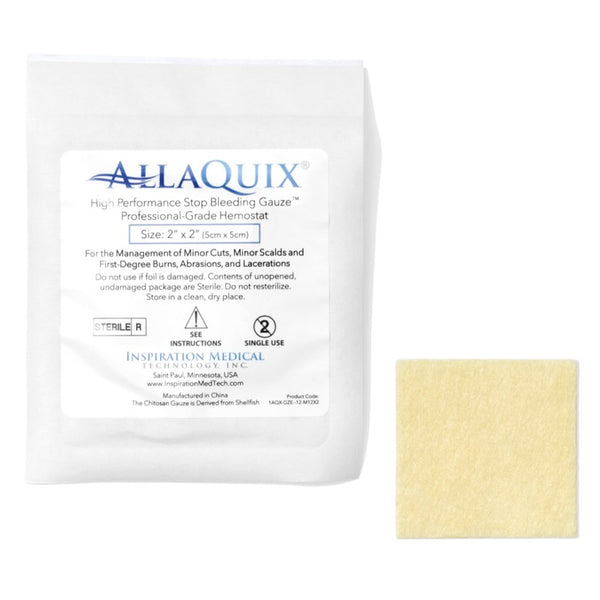
CHITOSAN
AllaQuix® High-Performance 2 × 2
Attracts red blood cells to form a mechanical seal, independently of your clotting cascade. The same technology used by the U.S. Military.
Best for: blood thinners, bleeding disorders, harder bleeds
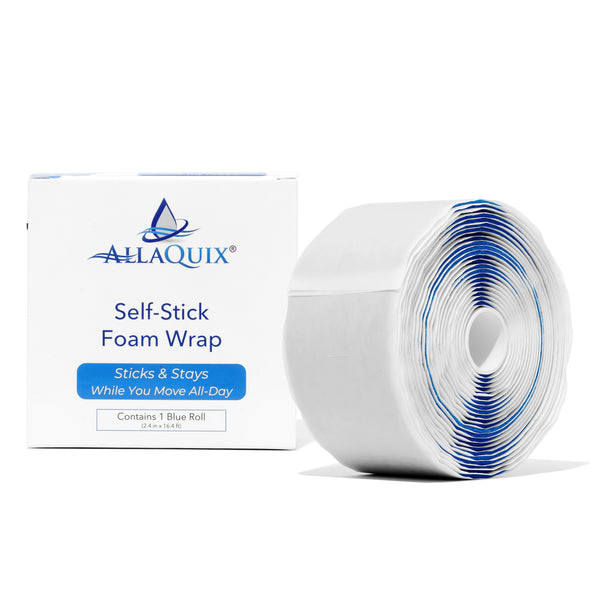
NO TAPE ON SKIN
Wrapid™ Self-Stick Foam Wrap
Grips only itself, never skin or hair. Holds a dressing in place without adhesive anywhere near the wound.
Best for: securing a dressing, moving body parts
FAQ
Common questions on this topic
How long should I hold pressure before checking a cut?
Hold steady, firm pressure for at least 5 to 10 minutes before lifting to check. Peeking sooner disrupts the clot and can restart the bleeding, so use a timer if you can.
Why does my cut keep bleeding after 10 minutes?
A cut that keeps bleeding after 10 minutes of firm pressure may be deep, may be in an area that is hard to compress, or you may be on a blood thinner. If bleeding is significant after 10 minutes, seek medical care.
Should I remove the gauze if it soaks through?
No. Removing a soaked dressing pulls away the forming clot. Add fresh layers on top and keep pressing.
When should I go to the emergency room for a cut?
Seek emergency care if bleeding will not stop with pressure, blood spurts or pools, the cut is deep or gaping, an object is embedded, or the injury involves the neck, chest, or abdomen.
Does hemostatic gauze replace holding pressure?
No. Hemostatic gauze works together with direct pressure. You place it on the wound and continue to press firmly and continuously.
BEFORE YOU NEED IT
Be ready before the moment arrives
Not for emergency, arterial, or severe bleeding. General patient education, not medical advice.
Dallas, Texas
FDA reviewed and cleared. Nearly one million AllaQuix® sold.