What to Keep in a First Aid Kit for Someone on Blood Thinners
Quick answer
What should be in a first aid kit for someone on blood thinners?
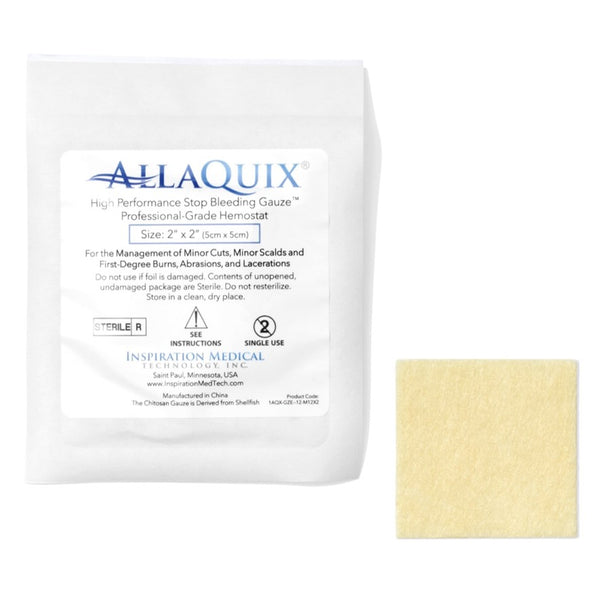
Chitosan hemostatic gauze for cuts that soak through a plain bandage, calcium alginate bandages for everyday nicks, nose plugs, a self-stick pressure wrap, island dressings, non-stick pads, scissors, gloves, a small flashlight, and a card listing every medication and the prescribing doctor. Keep a full kit in the bathroom and smaller copies in the car and travel bag.
At a glance
| Hemostatic gauze | Chitosan 2x2 inch, 2 to 4 at home |
|---|---|
| Everyday nicks | Calcium alginate adhesive bandages, 1 box |
| Nosebleeds | Calcium alginate nose plugs, 2 to 4 at home |
| Holding a dressing | Self-stick pressure wrap, 2 rolls |
| Medication card | Blood thinner name, dose, prescriber, emergency contact |
| Where to keep it | Bathroom cabinet, glove box, travel bag |
| Check it | Every 3 months and after any use |
| Call 911 | Spurting blood, bleeding after a fall or head injury, dizziness or confusion |
Updated November 2026. Written by the AllaQuix® Team. Reviewed for approved claims and accuracy.
Here is what to keep in a first aid kit for someone on blood thinners: chitosan hemostatic gauze for cuts that soak through a plain bandage, calcium alginate adhesive bandages for everyday nicks, nose plugs, a cohesive pressure wrap, island dressings, non-stick pads, scissors, gloves, a small flashlight, and a card listing every medication and the prescribing doctor. People taking Eliquis, Xarelto, warfarin (Coumadin), Pradaxa, Plavix, or daily aspirin bleed longer from small injuries, so the kit needs supplies that help stop bleeding rather than just cover it. It also makes a thoughtful holiday gift for a parent or grandparent on a blood thinner. This is a stocking guide; for the pressure technique, see how to stop bleeding on blood thinners, and for why anticoagulants change bleeding times, read does Eliquis make cuts bleed longer.
What should a first aid kit for someone on blood thinners contain?
A first aid kit for someone on blood thinners should contain chitosan hemostatic gauze, calcium alginate adhesive bandages, nose plugs, a cohesive pressure wrap, island dressings, non-stick pads, blunt-tip scissors, nitrile gloves, a small flashlight, and a medication card. Keep a full kit in the bathroom cabinet and smaller copies in the car and a travel bag.
Quantities suit one adult; a couple who both take anticoagulants should double the dressings.
| Item | What it is for | How many to keep | Where to keep it |
|---|---|---|---|
| Chitosan hemostatic gauze (2 x 2 inch) | Cuts, skin tears, and shaving or dental bleeds that soak through a plain bandage | 2 to 4 home, 1 to 2 car, 1 to 2 travel | Bathroom cabinet, car, travel bag |
| Calcium alginate adhesive bandages | Everyday nicks, paper cuts, small scrapes | 1 box home, 4 to 6 car, 4 to 6 travel | Bathroom cabinet, car, travel bag |
| Calcium alginate gauze (4 x 4 inch) | Larger scrapes and weepy skin tears | 2 home | Bathroom cabinet |
| Nose plugs (calcium alginate) | Nosebleeds | 2 to 4 home, 1 car, 1 to 2 travel | Bathroom cabinet, car, travel bag |
| Cohesive pressure wrap | Holding a dressing on with steady pressure | 2 rolls home, 1 car, 1 travel | Bathroom cabinet, car, travel bag |
| Island dressings | Covering a wound once bleeding has stopped | 4 to 6 home, 2 car | Bathroom cabinet, car |
| Non-stick pads | Protecting a scrape or skin tear without pulling on removal | 4 to 6 home, 2 car, 2 travel | Bathroom cabinet, car, travel bag |
| Blunt-tip scissors | Cutting wrap, tape, or clothing | 1 home, 1 car | Bathroom cabinet, car |
| Nitrile gloves | Keeping a caregiver's hands clean | 4 pairs home, 2 car, 2 travel | Bathroom cabinet, car, travel bag |
| Medication card | Telling responders which blood thinner is taken and who prescribed it | 1 per kit, 1 wallet, 1 photo on phone | Bathroom cabinet, car, travel bag, wallet |
| Small flashlight | Finding the source of a bleed at night or in a dim car | 1 home, 1 car | Bathroom cabinet, car |
If you would rather not shop item by item, the AllaQuix® Variety Pack bundles chitosan gauze, calcium alginate dressings, and nose plugs in one box, a good core for the bathroom kit. Keep the home kit at eye level in the bathroom, where shaving, flossing, and nose blowing happen, and the car pouch in the glove box, not the trunk.
Why does chitosan gauze matter for people on blood thinners?
Chitosan gauze matters for people on blood thinners because chitosan works independently of the clotting cascade, which is the process blood thinners slow down. AllaQuix® High Performance gauze is FDA reviewed and cleared, uses the same chitosan technology used by the U.S. Military, and is made for people who normally have trouble stopping bleeding.
A plain gauze pad only absorbs. The MedlinePlus patient page on apixaban (Eliquis) notes that bleeding may take longer to stop while taking the medication, so you end up swapping soaked pads. Chitosan is a natural fiber derived from shellfish shells, and it helps blood at the wound surface form a seal without relying on the chain reaction your medication slows. That is why the AllaQuix® High Performance Stop Bleeding Gauze, 2 x 2 inch sits at the top of the table.
For everyday nicks, calcium alginate is the workhorse. Calcium alginate absorbs up to 20x its weight and forms a soft gel on contact with wound fluid, so the pad does not dry onto the cut. AllaQuix Lite adhesive bandages and the Nose Bleed plugs both use it, and our guide to blood thinners and nuisance bleeding covers both materials.
How do I prepare for nosebleeds and shaving nicks?
Nosebleeds and shaving nicks are the two most common nuisance bleeds for people on blood thinners, so the kit should hold calcium alginate nose plugs and at least two chitosan or calcium alginate dressings sized for the face. Keep both within arm's reach of the bathroom mirror, where most of these bleeds start.
Nosebleeds
Dry indoor air and nose blowing start most nosebleeds, and an anticoagulant makes a small one last longer. The AllaQuix® Nose Bleed plugs are shaped to sit in the nostril and made of calcium alginate, so they absorb and soften rather than sticking to the lining on removal. Keep a few in the bathroom and one in the car and travel bag.
The Vasculearn Network (formerly the National Blood Clot Alliance) guide on managing minor bleeding on blood thinners recommends firm, steady pressure and seeking care for bleeding that will not stop. See when to worry about a nosebleed for timing.
Shaving nicks
A nick on the jaw or shin is tiny but stubborn on a blood thinner. Keep a small calcium alginate adhesive bandage or a chitosan pad cut to size next to the razor, and leave the dressing in place rather than peeking. An electric razor cuts down on nicks.
What goes on the medication card, and what should I tell emergency responders?
A medication card for someone on blood thinners should list the person's full name and date of birth, every medication with dose and timing, the blood thinner in plain words, allergies, the prescribing doctor's name and phone number, and an emergency contact. Emergency responders need the name of the anticoagulant first, because it changes how they manage bleeding.
The American Heart Association patient guide to taking warfarin advises carrying identification that states you take an anticoagulant, so responders know right away. A wallet card or medical ID bracelet does that job, and a copy in each kit means a caregiver can hand it over without searching. Include:
- Full name, date of birth, and an emergency contact phone number
- The blood thinner by brand and generic name (for example, Eliquis, apixaban), with dose and time of day
- Every other medication, including daily aspirin and over-the-counter products
- Allergies, including shellfish, since chitosan is derived from shellfish shells
- The prescribing doctor, clinic phone number, and the reason for the anticoagulant in a few words
When responders arrive, tell them the name of the blood thinner, when the last dose was taken, where the bleeding is and how long it has lasted, and whether there was a fall or a blow to the head. Say the words “blood thinner” early.
How often should I check the kit, and what am I checking for?
Check a first aid kit for someone on blood thinners every three months, tied to the change of seasons, and restock immediately after any use. The quarterly check covers expiry dates on sterile dressings, items opened and not replaced, adhesives and wraps damaged by heat or cold, and whether the medication card still matches the current prescription list.
- Empty every kit onto a towel. Do the bathroom kit, the car pouch, and the travel bag on the same day.
- Check every expiry date. Sterile dressings, hemostatic gauze, and adhesive bandages all carry one. Replace anything within three months of expiring.
- Replace anything opened or used. A torn package is no longer sterile. Count against the table above and note what is missing.
- Inspect adhesives and wraps for heat or cold damage. Tacky, brittle, or curled bandages and wrap fused to itself go in the trash.
- Update the medication card. A changed dose, a new pill, or a new doctor means a new card in every kit, wallet, and phone.
- Swap for the season. Add nose plugs before winter, when dry heated air drives nosebleeds, and non-stick pads before summer, when yard work brings scrapes.
- Test the flashlight, find the scissors, and calendar the next check. The first day of each season is easy to remember, and the check takes about 15 minutes.
What the kit cannot handle: when to call 911
A home first aid kit for someone on blood thinners is built for small, visible bleeds such as cuts, skin tears, shaving nicks, and nosebleeds. The kit cannot handle bleeding that spurts, bleeding that soaks through a hemostatic dressing under firm pressure, any bleeding after a head injury, or internal bleeding, all of which need 911 or emergency care.
Call 911 when:
- Blood is spurting, or a dressing soaks through despite firm pressure
- Bleeding follows a fall or any blow to the head, even without a visible wound
- The person feels dizzy, faint, confused, or unusually weak, or has a sudden, intense headache
- A nosebleed runs past 20 minutes of steady pressure, or blood is running down the throat
- Stools are black or bloody, urine is red or brown, or vomit looks like coffee grounds
Bring the medication card, and leave any decision about the blood thinner itself to the doctor.
Frequently Asked Questions
What should someone on Eliquis keep at home for bleeding?
Keep chitosan hemostatic gauze for cuts that soak through a plain bandage, calcium alginate adhesive bandages for everyday nicks, nose plugs, a cohesive pressure wrap, non-stick pads, island dressings, scissors, gloves, and a card listing every medication and the prescribing doctor. Store the main kit in the bathroom cabinet.
Do I need a special first aid kit if I take a blood thinner?
A standard kit covers most things, but it usually lacks the two items that matter most on a blood thinner: a hemostatic dressing made for people who normally have trouble stopping bleeding, and a medication card for emergency responders. Adding those, plus nose plugs and a pressure wrap, prepares the kit for longer bleeding times.
Why is chitosan gauze a good fit for people who bleed longer?
Chitosan is a natural fiber that works independently of the clotting cascade, the process that blood thinners slow down. AllaQuix® High Performance gauze is FDA reviewed and cleared and uses the same chitosan technology used by the U.S. Military, which makes it a practical choice when a plain bandage keeps soaking through.
Is a first aid kit a good gift for someone on a blood thinner?
Yes, if it is built for longer bleeding times. Pair a few chitosan gauze pads, calcium alginate bandages, and nose plugs with a printed medication card, or start with the AllaQuix® Variety Pack and add a pressure wrap and island dressings.
What should the medication card say?
List the full name, date of birth, every medication with dose and timing, the blood thinner in plain words, allergies, the prescribing doctor with a phone number, and an emergency contact. Keep one copy in each kit, one in the wallet, and a photo on the phone.
When should someone on blood thinners call 911 for bleeding?
Call 911 for bleeding that spurts, soaks through a hemostatic dressing under firm pressure, follows a fall or head injury, or comes with dizziness, confusion, or weakness. Also seek urgent care for a nosebleed past 20 minutes or for black or bloody stools or vomit.
Build the kit once and keep it ready
Start with the two items an ordinary kit is missing. The AllaQuix® High Performance Stop Bleeding Gauze in the 2 x 2 inch size is FDA reviewed and cleared and uses the chitosan technology used by the U.S. Military, and the AllaQuix Nose Bleed plugs cover the most common nuisance bleed of all. Add the rest from the table, print the card, and put the quarterly check on the calendar.
This article is general information from the makers of AllaQuix® and is not medical advice. Talk to your doctor or another qualified health professional about your own health or medications. Not for emergency, arterial, or severe bleeding. For bleeding that will not stop, call 911 or seek emergency care.