
When to Worry About a Nosebleed
The red flags that mean urgent care or 911, the patterns worth a doctor's visit, and how to stop a nosebleed the right way first.
Reviewed by Inspiration Medical Technology, Inc. All articles are reviewed for accuracy and brand-voice compliance by the team behind AllaQuix®. Not a substitute for medical advice from your doctor.
Most nosebleeds stop with the right pressure
Before deciding a nosebleed won't stop, make sure it's had a fair chance. The routine below stops most front-of-the-nose bleeds.
The routine
- Sit up and lean slightly forward so blood drains out, not down your throat.
- Pinch the soft part of the nose, just below the bony bridge, closing both nostrils.
- Hold for 10 to 15 minutes by the clock. Don't let go to check.
- Breathe through your mouth and spit out any blood rather than swallowing it.
- If it restarts, repeat once. A nasal plug can help the second round.
Skip tilting your head back, lying down, or packing tissue deep into the nose.
FOR THE SECOND ROUND
If it restarts after you let go
Soft calcium alginate plugs that gel in the nostril, absorb up to 20 times their weight and lift out without pulling.
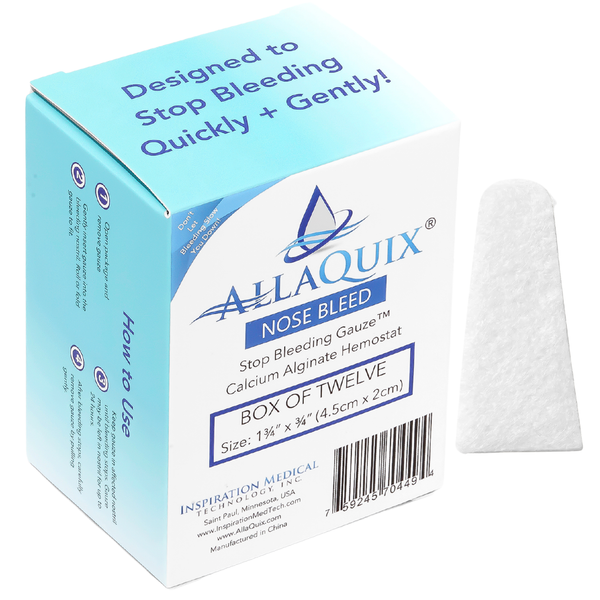
CALCIUM ALGINATE PLUGS
AllaQuix® Nose Bleed Plugs
Soft, thin calcium alginate plugs that gel in the nostril and help stop nosebleeds quick. Sterile, latex-free and individually wrapped. Box of 12.
Best for: recurring nosebleeds, kids and adults, people on blood thinners
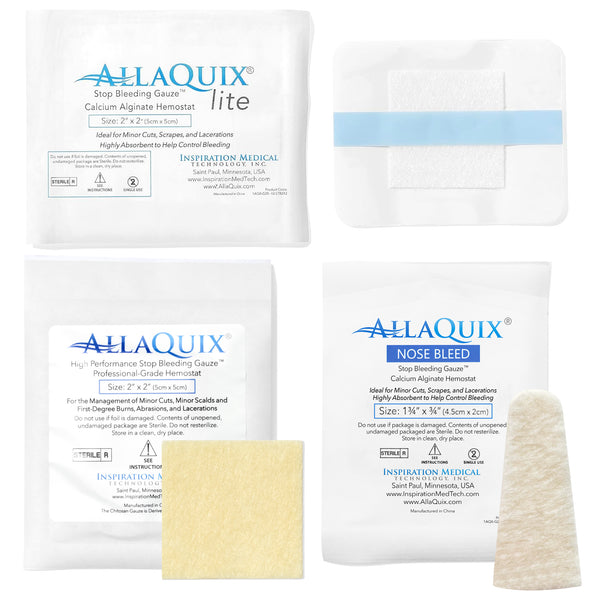
TRY ALL THREE
AllaQuix® Variety Pack
One Nose Bleed plug, one Lite adhesive bandage and one High Performance gauze, each sterile and individually wrapped. The easy way to try AllaQuix®.
Best for: first-time buyers, school and travel bags
When a nosebleed is an emergency
Call 911, or have someone drive you to the emergency room, if any of these are true:
Emergency signs
- Trouble breathing
- Feeling faint, dizzy, confused or very pale
- A lot of blood, or vomiting blood
- The nosebleed followed a hard blow to the head, or a fall, especially with a headache or drowsiness
When to go to urgent care or the ER
These aren't 911 situations, but they do need a clinician the same day:
Same-day care
- Still bleeding after 20 minutes of steady pressure (two full rounds of pinching)
- Blood running down the back of the throat even while leaning forward, which can mean the bleed is further back in the nose
- You take a blood thinner and the bleeding isn't slowing
- The nose looks crooked or swollen after an injury
- A child under 2 has a nosebleed
Patterns worth a doctor's visit
A single nosebleed that stops with pressure usually needs nothing more. A pattern is different. Book a regular appointment if you notice:
Worth a check
- Nosebleeds more than once a week, or several in a month
- Bleeding that's always from the same nostril, especially with a blocked nose on that side
- Easy bruising, bleeding gums, or small cuts that take a long time to stop
- Nosebleeds that started after a new medicine or supplement
- High blood pressure that isn't well controlled
When to worry about a child's nosebleed
Nosebleeds are very common between about ages 2 and 10, usually from dry air and nose picking, and most are harmless. Use the same routine: sit them up, lean forward, pinch for 10 minutes, and keep them calm.
Call the pediatrician for a child under 2 with a nosebleed, nosebleeds that happen often, a child who also bruises easily, or a nosebleed after something was pushed into the nose. For schools, see our nosebleed protocol for school nurses.
If you take a blood thinner, or you're over 65
Blood thinners don't cause nosebleeds, but they can make one last longer. Hold pressure for the full 15 minutes, and plan on a second round before worrying. Don't stop or skip your medicine because of a nosebleed. Call the doctor who prescribes it if the nosebleeds become frequent.
Older adults are more likely to have bleeds from further back in the nose and more likely to take medicines that affect clotting. See nosebleeds in older adults: when to worry for the details.
MADE FOR PEOPLE ON BLOOD THINNERS
Keep a nosebleed plug by the bed and in the bag
Sterile, latex-free and individually wrapped.
CALCIUM ALGINATE PLUGS
AllaQuix® Nose Bleed Plugs
Soft, thin calcium alginate plugs that gel in the nostril and help stop nosebleeds quick. Sterile, latex-free and individually wrapped. Box of 12.
Best for: recurring nosebleeds, kids and adults, people on blood thinners
TRY ALL THREE
AllaQuix® Variety Pack
One Nose Bleed plug, one Lite adhesive bandage and one High Performance gauze, each sterile and individually wrapped. The easy way to try AllaQuix®.
Best for: first-time buyers, school and travel bags
After the bleeding stops
The clot is fragile for the first day. For 24 hours, avoid blowing your nose, bending over, heavy lifting and hot drinks. Keep the inside of the nose moist with saline spray or a thin layer of petroleum jelly, and run a humidifier at night.
FAQ
Common questions on this topic
How long is too long for a nosebleed?
If a nosebleed is still going after 20 minutes of steady pressure, get medical care. Most stop within 10 to 15 minutes when pinched correctly.
Should I go to the ER for a nosebleed that won't stop?
Go to urgent care or the ER if it hasn't stopped after 20 minutes of pressure, if blood is running down your throat while leaning forward, or if you take a blood thinner and it isn't slowing. Call 911 for trouble breathing, feeling faint, or a lot of blood.
Is a nosebleed a sign of high blood pressure?
Not usually on its own, but high blood pressure is linked with nosebleeds that are harder to stop. If you get frequent nosebleeds, have your blood pressure checked.
Why does my nose bleed from one nostril?
Most nosebleeds come from one side, from a small vessel near the front of the septum. Repeated bleeding from the same side, especially with a blocked nostril, is worth a doctor's visit.
Can I use a nasal plug while I wait?
Yes. After a full round of pinching, a soft nasal plug can help if the bleeding restarts. If you still need care, leave it in place and let the clinician remove it.
BEFORE THE NEXT ONE
Keep a nosebleed plug where nosebleeds happen
Not for emergency, arterial, or severe bleeding. General patient education, not medical advice.
Dallas, Texas
FDA reviewed and cleared. Nearly one million AllaQuix® sold.