
Nosebleed in One Nostril: Why It Happens
Why most nosebleeds come from one side, why the same nostril keeps bleeding, and when it's worth an ENT visit.
Reviewed by Inspiration Medical Technology, Inc. All articles are reviewed for accuracy and brand-voice compliance by the team behind AllaQuix®. Not a substitute for medical advice from your doctor.
Why nosebleeds usually come from one nostril
The wall between your nostrils, the septum, has a patch of small blood vessels close to the surface near the front. When one of those vessels breaks, blood comes out of the nostril on that side. That's why most nosebleeds are one-sided.
Sometimes blood seems to come from both nostrils. Usually that's blood from one side flowing around the back of the septum into the other side, not two separate bleeds.
Why the same nostril keeps bleeding
Once a vessel has bled, the lining over it is thin and crusted while it heals, so it breaks again easily. A few other things make one side more likely than the other.
Common reasons
- A healing spot that keeps cracking, especially when the crust gets picked or blown out
- Dry air hitting one side more, from sleeping on that side or a deviated septum that directs airflow
- A nasal spray aimed at the septum, which irritates the same spot every day
- Habit. Most people rub or pick with the same hand, on the same side
- A vessel that sits unusually close to the surface, which an ENT can treat
FOR THE NIGHTSTAND
When the same side keeps bleeding
Soft calcium alginate plugs that gel in the nostril and lift out without pulling.
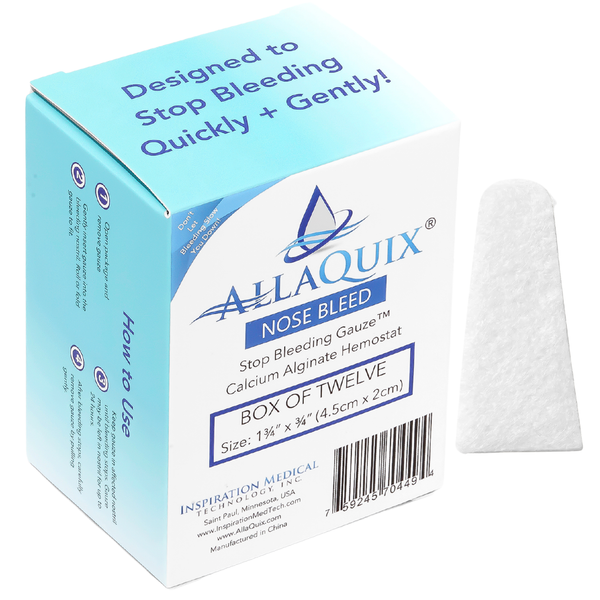
CALCIUM ALGINATE PLUGS
AllaQuix® Nose Bleed Plugs
Soft, thin calcium alginate plugs that gel in the nostril and help stop nosebleeds quick. Sterile, latex-free and individually wrapped. Box of 12.
Best for: recurring nosebleeds, kids and adults, people on blood thinners
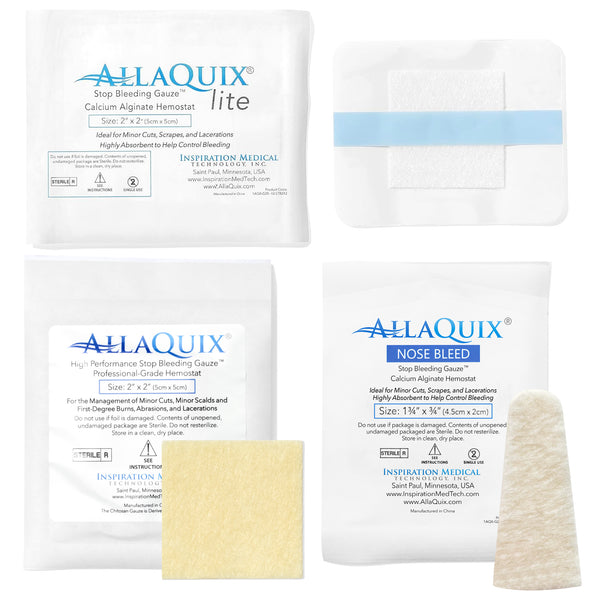
TRY ALL THREE
AllaQuix® Variety Pack
One Nose Bleed plug, one Lite adhesive bandage and one High Performance gauze, each sterile and individually wrapped. The easy way to try AllaQuix®.
Best for: first-time buyers, school and travel bags
How to stop a one-sided nosebleed
Sit up, lean slightly forward and pinch the soft part of the nose, closing both nostrils, for 10 to 15 minutes without checking. Pinching both sides matters even when only one is bleeding, because it presses the septum where the bleed usually is.
If it restarts when you let go, repeat once. A soft nasal plug in the bleeding nostril gives the vessel something to clot against while you rest. If it's still bleeding after 20 minutes of pressure, get medical care.
How to stop it coming back
The goal is to let that one spot heal fully, which usually takes one to two weeks of leaving it alone.
Give that side a break
- Apply a thin layer of petroleum jelly or saline gel just inside that nostril, morning and night
- Run a humidifier in the bedroom
- Don't pick or blow out the crust. Let it come away on its own
- Aim nasal sprays toward the outer wall of the nostril, away from the septum
- Blow your nose gently, one side at a time
FOR THE BAG
Keep one where you'll need it
Sterile, latex-free and individually wrapped.
CALCIUM ALGINATE PLUGS
AllaQuix® Nose Bleed Plugs
Soft, thin calcium alginate plugs that gel in the nostril and help stop nosebleeds quick. Sterile, latex-free and individually wrapped. Box of 12.
Best for: recurring nosebleeds, kids and adults, people on blood thinners
TRY ALL THREE
AllaQuix® Variety Pack
One Nose Bleed plug, one Lite adhesive bandage and one High Performance gauze, each sterile and individually wrapped. The easy way to try AllaQuix®.
Best for: first-time buyers, school and travel bags
When a one-sided nosebleed needs a doctor
Most one-sided nosebleeds are simply a vessel that needs time to heal. See your doctor or an ear, nose and throat specialist if you notice any of these:
Worth an appointment
- The same side bleeds more than once a week, or keeps bleeding for more than a few weeks
- That nostril also feels blocked, or you have discharge, facial pain or reduced sense of smell on that side
- You also bruise easily or your gums bleed
- You take a blood thinner and the nosebleeds are becoming more frequent
An ENT can often see the exact vessel and seal it in a quick office procedure called cauterization.
FAQ
Common questions on this topic
Is it normal for a nosebleed to come from one nostril?
Yes. Most nosebleeds come from one small vessel near the front of the septum, so they usually bleed from one side.
Why does my left (or right) nostril keep bleeding?
Usually because the spot that bled hasn't fully healed, or because that side gets more dry air, more rubbing, or a nasal spray aimed at the septum. Keep it moist and leave it alone for a week or two.
Can a deviated septum cause nosebleeds on one side?
It can. A deviated septum changes airflow so one side dries out more, which makes that side more likely to crack and bleed.
Should I be worried about a nosebleed from one nostril?
A single one-sided nosebleed that stops with pressure usually isn't a concern. Repeated one-sided bleeding, especially with a blocked nostril on that side, is worth an ENT visit.
What is nasal cauterization?
A quick office procedure where an ENT seals the bleeding vessel, usually with a chemical applicator after numbing the area. It's a common treatment for frequent nosebleeds from one spot.
BEFORE THE NEXT ONE
Keep a nosebleed plug where nosebleeds happen
Not for emergency, arterial, or severe bleeding. General patient education, not medical advice.
Dallas, Texas
FDA reviewed and cleared. Nearly one million AllaQuix® sold.