
Nosebleed Stoppers Compared
Plugs, clips, clotting strips and sprays: what each one does, what hospitals use, and how to choose.
Reviewed by Inspiration Medical Technology, Inc. All articles are reviewed for accuracy and brand-voice compliance by the team behind AllaQuix®. Not a substitute for medical advice from your doctor.
Every option starts with pressure
No product replaces the basics. Sit up, lean slightly forward, and pinch the soft part of the nose closed for 10 to 15 minutes without letting go to check. Most nosebleeds stop there.
A nosebleed stopper earns its place when the bleed restarts after you let go, when someone can't hold pressure for that long, or when you need to get back to class, the game or the flight.
The main types of nosebleed stoppers
Here's what each category does and where it fits.
By type
- Plain cotton or gauze plugs. Absorb blood but don't help it clot, and loose fibers can stick in the clot and restart the bleed on removal.
- Foam or cellulose plugs with a clotting agent. Expand in the nostril and add gentle inside pressure, plus a coating meant to help the blood clot.
- Calcium alginate plugs. A plant-based fiber that gels on contact with blood, absorbs up to 20 times its weight and speeds up the clotting process. This is what AllaQuix® Nose Bleed plugs are made from.
- Clotting strips and powders. A coagulant material placed against the bleeding spot.
- Nose clips. An external clamp, sometimes with soft pads, that holds pressure for you.
- Decongestant sprays. Narrow the blood vessels in the nose. Clinicians use them, but they aren't right for everyone.
- Saline sprays and gels. Help prevent nosebleeds by keeping the lining moist. They don't stop an active bleed.
CALCIUM ALGINATE
The AllaQuix® Nose Bleed plug
Soft and thin, gels on contact, expands gently and lifts out without pulling. Sterile, latex-free, individually wrapped.
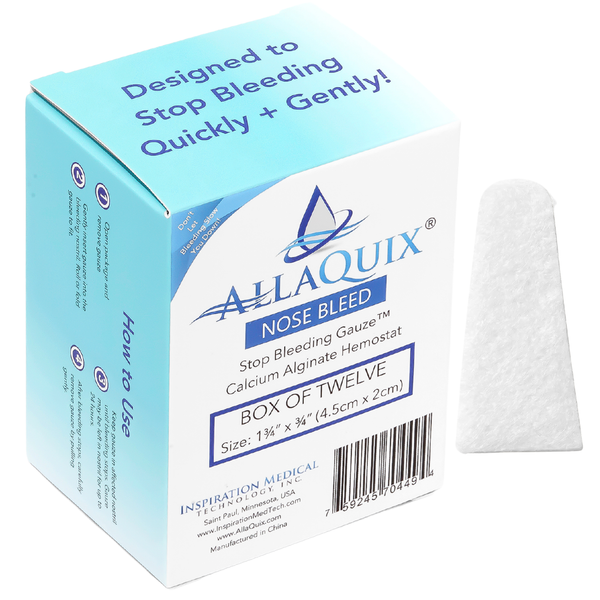
CALCIUM ALGINATE PLUGS
AllaQuix® Nose Bleed Plugs
Soft, thin calcium alginate plugs that gel in the nostril and help stop nosebleeds quick. Sterile, latex-free and individually wrapped. Box of 12.
Best for: recurring nosebleeds, kids and adults, people on blood thinners
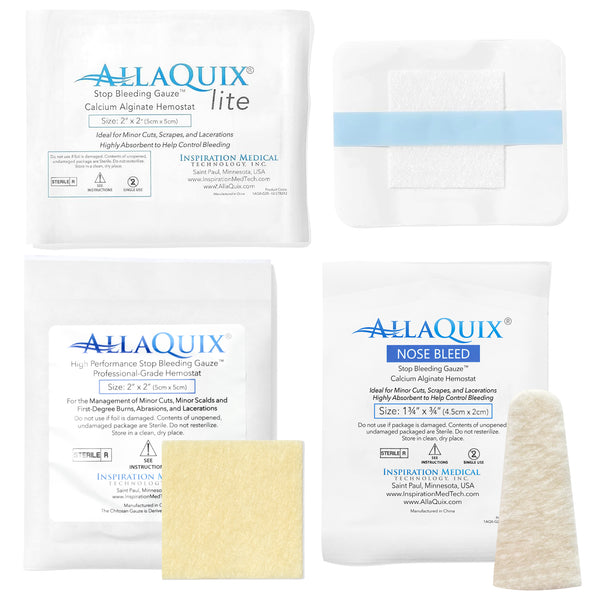
TRY ALL THREE
AllaQuix® Variety Pack
One Nose Bleed plug, one Lite adhesive bandage and one High Performance gauze, each sterile and individually wrapped. The easy way to try AllaQuix®.
Best for: first-time buyers, school and travel bags
What to look for in a nasal plug
If you're choosing a plug, a few details matter more than the packaging claims.
Checklist
- Sterile and individually wrapped, so one can live in a bag or a pocket
- Soft and thin enough to go in comfortably, including for kids
- Gentle removal. A plug that sticks to the clot can restart the bleed when it comes out
- Latex-free and free of fragrances
- A material that helps clotting, not just absorbs blood
What do hospitals use to stop nosebleeds?
In urgent care or the emergency room, the order is usually: firm pressure, a decongestant spray to narrow the vessels, and a numbing spray so the inside of the nose can be examined. If the bleeding spot is visible, it can be sealed with a chemical applicator or heat, a procedure called cauterization.
If that isn't enough, clinicians use nasal packing: expandable sponges or small inflatable balloons placed in the nose, sometimes with medicine that helps clotting. Bleeds from further back in the nose may need a specialist. These are clinical tools, which is why a nosebleed that won't stop after 20 minutes of pressure belongs in their hands.
A word on decongestant nasal sprays
Decongestant sprays such as oxymetazoline can help a nosebleed by narrowing the blood vessels, and clinicians often use one first. They aren't suitable for everyone, including some people with high blood pressure, heart conditions or certain medicines, and using them for more than about three days in a row can cause rebound congestion. Ask a pharmacist or your doctor before relying on one.
How to choose for your situation
The right stopper depends on who's bleeding and where.
Quick picks
- Kids: a soft, thin plug that's easy to insert and comes out gently, plus a calm adult pinching first
- People on blood thinners: a plug made for them, and patience with a full 15-minute pinch first
- School nurses and athletic trainers: individually wrapped plugs that get students and athletes back to class or play
- Travel and bags: sterile, individually wrapped plugs that take no space
- Someone who can't hold pressure: a nose clip can hold it for them
FOR THE BAG AND THE NIGHTSTAND
Keep one where nosebleeds happen
Box of 12, or try one in the Variety Pack.
CALCIUM ALGINATE PLUGS
AllaQuix® Nose Bleed Plugs
Soft, thin calcium alginate plugs that gel in the nostril and help stop nosebleeds quick. Sterile, latex-free and individually wrapped. Box of 12.
Best for: recurring nosebleeds, kids and adults, people on blood thinners
TRY ALL THREE
AllaQuix® Variety Pack
One Nose Bleed plug, one Lite adhesive bandage and one High Performance gauze, each sterile and individually wrapped. The easy way to try AllaQuix®.
Best for: first-time buyers, school and travel bags
FAQ
Common questions on this topic
What is the best nosebleed stopper?
It depends on the person. For most people, pinching first and then a soft plug that helps clotting and comes out gently covers the majority of nosebleeds. Kids need a thin, comfortable plug, and people who can't hold pressure may prefer a clip.
What's the difference between Nampons and BleedStop?
They're different formats. Nampons are a foam plug with a clotting agent, and BleedStop is a coagulant strip. AllaQuix® Nose Bleed plugs are a third type, made of calcium alginate, which gels on contact with blood.
Do nosebleed plugs actually work?
A plug gives the bleeding spot something to clot against while you rest, and many people find it helps a nosebleed that restarts after pinching. For the full answer, see do nosebleed plugs actually work.
Are cotton balls OK for a nosebleed?
They're better than nothing, but cotton fibers can stick in the clot and restart the bleed when the cotton comes out. A plug designed for nosebleeds is a better choice.
Can a nose clip replace pinching?
A well-fitted clip holds the same pressure as pinching, which helps people who can't pinch for 10 to 15 minutes. It still needs the full time to work.
BEFORE THE NEXT ONE
Keep a nosebleed plug where nosebleeds happen
Not for emergency, arterial, or severe bleeding. General patient education, not medical advice.
Dallas, Texas
FDA reviewed and cleared. Nearly one million AllaQuix® sold.