
Nosebleeds on Blood Thinners
How to stop a nosebleed when you take a blood thinner, how to prevent the next one, and when to call your doctor.
Reviewed by Inspiration Medical Technology, Inc. All articles are reviewed for accuracy and brand-voice compliance by the team behind AllaQuix®. Not a substitute for medical advice from your doctor.
Why nosebleeds last longer on a blood thinner
Most nosebleeds start when a small vessel near the front of the nose breaks, usually from dry air, a cold or a rub. A blood thinner doesn't cause that break, but it slows how well the body plugs it.
Anticoagulants such as warfarin, apixaban, rivaroxaban and dabigatran slow the clotting proteins. Antiplatelets such as daily aspirin and clopidogrel make platelets less sticky. Either way, the same nosebleed simply takes longer to settle, and people on both types, or on two medicines at once, notice it most.
How to stop a nosebleed on a blood thinner
The routine is the same as for anyone else. The difference is patience.
The routine
- Sit up and lean slightly forward. Don't tilt your head back or lie down.
- Gently blow out any clots once, then pinch the soft part of the nose closed.
- Hold for a full 15 minutes by the clock. Don't let go to check.
- If it restarts, do a second 15-minute round. A soft nasal plug in the bleeding nostril can help this round.
- Ask your doctor or pharmacist ahead of time whether a decongestant nasal spray is OK for you to use during a nosebleed.
MADE FOR PEOPLE ON BLOOD THINNERS
For the second round of pressure
Soft calcium alginate plugs that gel in the nostril, absorb up to 20 times their weight and lift out without pulling.
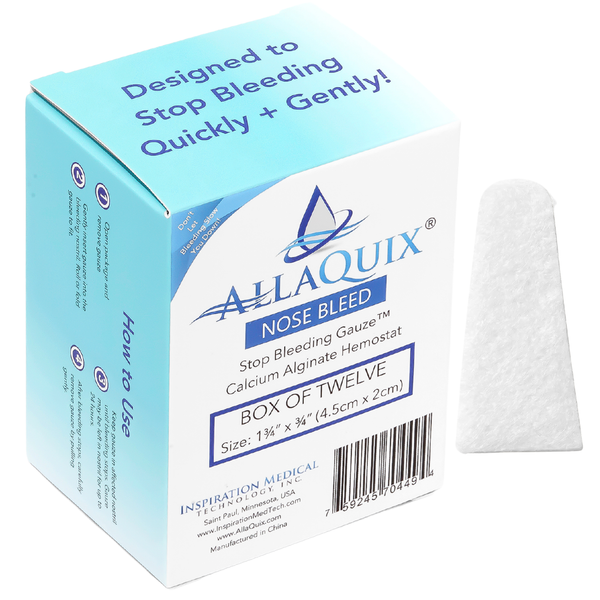
CALCIUM ALGINATE PLUGS
AllaQuix® Nose Bleed Plugs
Soft, thin calcium alginate plugs that gel in the nostril and help stop nosebleeds quick. Sterile, latex-free and individually wrapped. Box of 12.
Best for: recurring nosebleeds, kids and adults, people on blood thinners
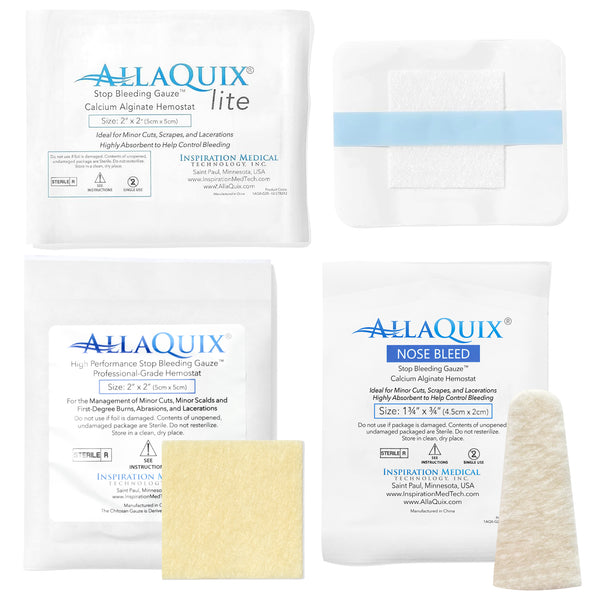
TRY ALL THREE
AllaQuix® Variety Pack
One Nose Bleed plug, one Lite adhesive bandage and one High Performance gauze, each sterile and individually wrapped. The easy way to try AllaQuix®.
Best for: first-time buyers, school and travel bags
Don't stop your medicine
It's tempting to skip a dose after a nosebleed. Don't. Blood thinners are prescribed to prevent strokes, clots and heart problems that are far more dangerous than a nosebleed. Stopping suddenly can raise that risk.
Instead, tell the doctor who prescribes it if nosebleeds are becoming frequent or harder to stop. If you take warfarin, a nosebleed that's unusual for you is a good reason to ask whether your INR needs checking.
How to have fewer nosebleeds
A moist nasal lining cracks less, and that matters more when every crack takes longer to stop.
Daily habits
- Run a humidifier in the bedroom, especially during the heating season
- Use saline spray or gel once or twice a day
- Apply a thin layer of petroleum jelly just inside the nostrils at bedtime
- Blow gently, one side at a time, and don't pick at crusts
- Aim any nasal spray toward the outer wall of the nostril, away from the septum
- Keep a nosebleed plug by the bed and in your bag
FOR CUTS TOO
Keep bleeding control at home
Nose Bleed plugs for the nose, and chitosan gauze that works independently of the clotting cascade for minor cuts.
CALCIUM ALGINATE PLUGS
AllaQuix® Nose Bleed Plugs
Soft, thin calcium alginate plugs that gel in the nostril and help stop nosebleeds quick. Sterile, latex-free and individually wrapped. Box of 12.
Best for: recurring nosebleeds, kids and adults, people on blood thinners
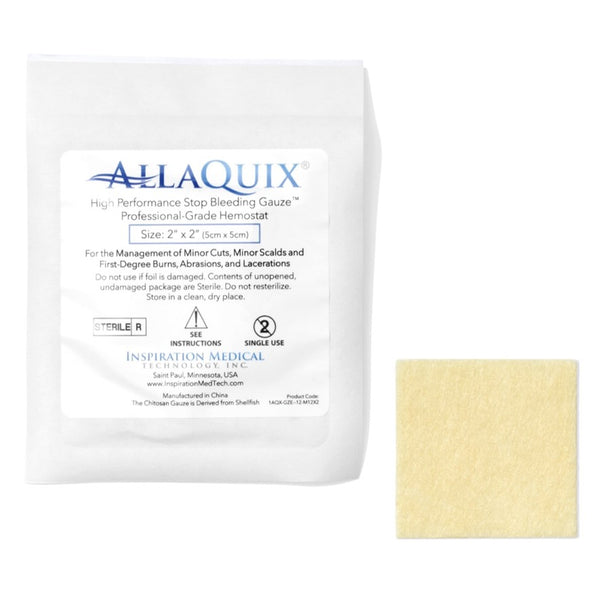
CHITOSAN
AllaQuix® High Performance 2 × 2
Chitosan gauze that attracts red blood cells to form a mechanical seal, independently of the clotting cascade. The same technology used by the U.S. Military.
Best for: minor cuts and abrasions that keep oozing, blood thinner users
When to call your doctor or get care
Most nosebleeds on a blood thinner still stop at home. These are the signs that they need more:
Get care or call
- Call 911 for trouble breathing, feeling faint, a lot of blood, or a nosebleed after a hard blow to the head
- Get care today if it's still bleeding after 20 to 30 minutes of steady pressure, or blood runs down your throat while you lean forward
- Call your prescriber if nosebleeds are becoming frequent, or you notice other bleeding such as bleeding gums, blood in urine, or black stools
If nosebleeds keep coming back
Frequent nosebleeds from the same spot can often be treated by an ear, nose and throat specialist, who can seal the vessel in a short office procedure. That is usually a better fix than living with repeat bleeds. For more on bleeding control on blood thinners, see how to stop bleeding on blood thinners and when to worry about a nosebleed.
FAQ
Common questions on this topic
Is it normal to get nosebleeds on blood thinners?
Nosebleeds are more common and last longer on blood thinners. Occasional nosebleeds that stop with pressure are common. Frequent ones are worth mentioning to your prescriber.
How long should a nosebleed last on a blood thinner?
Many stop within 15 to 20 minutes of steady pressure. If it's still bleeding after 20 to 30 minutes of correct pressure, get medical care.
Should I stop my blood thinner if I get a nosebleed?
No. Don't stop or skip a dose on your own. Talk to the doctor who prescribes it if nosebleeds are frequent or hard to stop.
Can I use a nasal plug if I take a blood thinner?
Yes. A soft nasal plug can help after a round of pinching. AllaQuix® Nose Bleed plugs are made for people on blood thinners and lift out without pulling.
Do nosebleeds on Eliquis or warfarin need an ER visit?
Only if the nosebleed doesn't stop after 20 to 30 minutes of steady pressure, blood runs down your throat, or you have trouble breathing or feel faint. Otherwise, treat it at home and tell your prescriber if it keeps happening.
BEFORE THE NEXT ONE
Keep a nosebleed plug by the bed and in the bag
Not for emergency, arterial, or severe bleeding. General patient education, not medical advice.
Dallas, Texas
FDA reviewed and cleared. Nearly one million AllaQuix® sold.