
Thin Skin That Tears and Bleeds Easily
Why skin gets thin and fragile, which medicines add to it, how to protect it, and how to care for a cut without causing a new tear.
Reviewed by Inspiration Medical Technology, Inc. All articles are reviewed for accuracy and brand-voice compliance by the team behind AllaQuix®. Not a substitute for medical advice from your doctor.
What causes skin to become thin and tear easily
With age, skin makes less collagen and elastin, the outer layer thins, and the layer of fat underneath shrinks. The connection between the top layers flattens, so they slide apart more easily. That's what a skin tear is: the top layer peeling away from the one beneath.
Sun exposure speeds this up. The backs of the hands and the forearms, which get the most sun over a lifetime, are usually the first places skin gets thin and the most common places for skin tears and bruises.
Main contributors
- Aging, which thins every layer of the skin
- Years of sun exposure
- Long-term corticosteroid medicines
- Smoking, which reduces blood flow and collagen
- Some inherited connective tissue conditions
What medication causes thin skin?
Corticosteroids are the main one. Long-term use of steroid tablets such as prednisone, high-dose inhaled steroids, or strong steroid creams on the same patch of skin can all thin the skin over time.
Blood thinners and antiplatelets, such as warfarin, apixaban, rivaroxaban, clopidogrel and daily aspirin, don't thin the skin. They make the bleeding under it spread further, so bruises look bigger and small cuts ooze longer. Don't stop or change a prescribed medicine on your own. If thin skin or bruising is getting worse, bring it up with the doctor who prescribes it.
Treatment for thin skin and easy bruising
You can't fully reverse thin skin, but you can make it stronger and much less likely to tear.
Daily habits that help
- Moisturize twice a day, ideally right after bathing, with a fragrance-free cream
- Use sunscreen and long sleeves to slow further sun damage
- Pad the places you bump, like bed rails, wheelchair arms and furniture edges, and consider soft arm protectors
- Keep nails short and take off rings with sharp edges
- Eat enough protein and stay hydrated
- Ask a dermatologist about prescription creams that can help strengthen thin skin
How to care for a cut or tear on thin skin
Press gently with a clean pad until the bleeding settles. On a blood thinner that can take 10 to 15 minutes. Rinse with clean water and pat dry around the wound.
If a flap of skin is still attached, lay it back gently where it belongs rather than trimming it. Then cover it with a non-stick dressing held without regular tape, and mark the direction to remove it so the next change doesn't lift the flap. For the full routine, see how to treat a skin tear on thin skin.
Dressing fragile skin
- Skip regular adhesive tape on the skin itself
- Choose a gentle, hypoallergenic dressing
- Remove dressings slowly, low and close to the skin, peeling toward the wound
- Dampen any dressing that sticks before lifting it
GENTLE ON FRAGILE SKIN
Dressings made for thin skin
Calcium alginate that gels on contact, with a gentle hypoallergenic adhesive and no burning or stinging.

CALCIUM ALGINATE BANDAGE
AllaQuix® Lite Adhesive Bandages
Calcium alginate bandages that gel on contact and absorb up to 20 times their weight. Hypoallergenic, no burning or stinging, gentle on thin or fragile skin.
Best for: fragile skin, blood thinner users, everyday cuts

CALCIUM ALGINATE
AllaQuix® Lite Gauze 2 × 2
Calcium alginate that gels on contact and absorbs up to 20 times its own weight. Hypoallergenic and gentle on thin or fragile skin.
Best for: small cuts, sensitive skin, daily nuisance bleeds
Easy bruising on the arms
Flat, purple patches on the forearms and backs of the hands are very common in older adults, especially with thin skin, sun damage or a blood thinner. They come from fragile vessels just under the surface and usually fade over a couple of weeks.
They don't need a dressing unless the skin is broken. Protecting the arms from bumps is the main prevention.
FOR THE DRAWER
Keep gentle dressings ready
For the next cut or tear, before it happens.
CALCIUM ALGINATE BANDAGE
AllaQuix® Lite Adhesive Bandages
Calcium alginate bandages that gel on contact and absorb up to 20 times their weight. Hypoallergenic, no burning or stinging, gentle on thin or fragile skin.
Best for: fragile skin, blood thinner users, everyday cuts
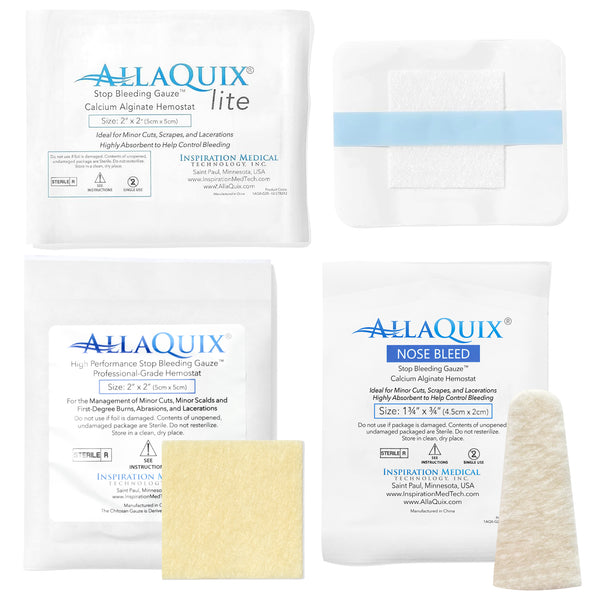
TRY ALL THREE
AllaQuix® Variety Pack
One Nose Bleed plug, one Lite adhesive bandage and one High Performance gauze, each sterile and individually wrapped. The easy way to try AllaQuix®.
Best for: first-time buyers, school and travel bags
When to see a doctor
Thin skin itself is common, but some signs are worth a check.
See a doctor if
- Bruises appear often without any bump you remember, or they're large
- You also have bleeding gums, frequent nosebleeds or blood in urine or stool
- A skin tear isn't healing after two weeks
- Redness spreads, it gets warmer or more painful, or pus appears
- Your skin changed soon after starting a new medicine
FAQ
Common questions on this topic
Can thin skin get thicker again?
Not fully, but daily moisturizing, sun protection and some prescription creams from a dermatologist can make it stronger and less likely to tear.
Do blood thinners make your skin thin?
No. They make bruises spread further and small cuts bleed longer, which can make skin seem more fragile. Talk to your prescriber before changing any medicine.
Why does my skin tear so easily on my arms?
The forearms and backs of the hands get the most sun over a lifetime and have little padding underneath, so they're usually the first places to thin and tear.
What's the best bandage for thin skin?
A gentle, hypoallergenic dressing that doesn't rely on strong tape, removed slowly toward the wound. Calcium alginate bandages like AllaQuix® Lite are gentle on thin or fragile skin.
Are vitamins good for thin skin?
A balanced diet with enough protein supports skin health. There's limited evidence that supplements thicken skin, so ask your doctor before starting any, especially if you take a blood thinner.
FOR FRAGILE SKIN
Keep gentle dressings where you'll need them
Not for emergency, arterial, or severe bleeding. General patient education, not medical advice.
Dallas, Texas
FDA reviewed and cleared. Nearly one million AllaQuix® sold.