Scab Came Off and It Will Not Stop Bleeding: What to Do
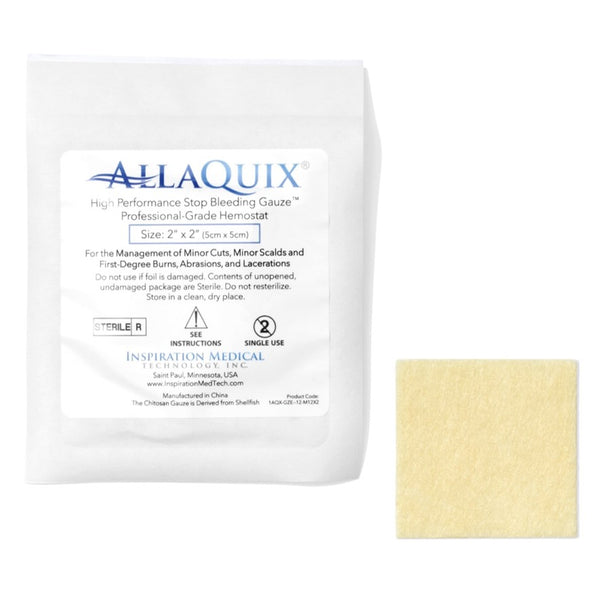
A scab that was ripped off and will not stop bleeding is a healing wound that has been re-opened, and the fix is the same one that worked the first time: clean hands, a clean pad, and firm, uninterrupted pressure. Hold a hemostatic pad such as AllaQuix® High Performance gauze in place for 2 to 3 minutes, or plain gauze for 5 to 10 minutes, without lifting it to check. Then cover the wound so the new scab can form and stay put. If the bleeding has not slowed after 10 to 15 minutes of steady pressure, call a doctor.
Why does a wound bleed so much when the scab comes off?
A wound bleeds freely when the scab comes off because the scab was covering fresh healing tissue packed with tiny new blood vessels, and that tissue has no tough skin over it yet. Pulling the scab away tears those delicate capillaries open all at once, which is why a week-old scrape can bleed as much as the original injury.
The bleeding looks dramatic, especially on a knee, shin, or knuckle, but it is oozing, not flow, and it responds well to direct pressure. The common mistake is lifting the gauze every 30 seconds to look, which pulls off the forming clot.
How to stop a scab from bleeding: the 5-step method
To stop a scab from bleeding, wash your hands, rinse the wound only if it is dirty, press a clean gauze pad or hemostatic pad directly onto the spot, hold firm pressure without peeking for 2 to 3 minutes with AllaQuix High Performance gauze or 5 to 10 minutes with plain gauze, and then cover the wound.
- Wash your hands. Soap and water, 20 seconds. MedlinePlus lists hand washing as the first step in cut care.
- Rinse only if the wound is dirty. If the scab came off in the shower or under clean clothing, go straight to pressure. If there is grit in the wound, rinse briefly under cool running water without scrubbing.
- Apply direct pressure with a clean pad. Press a folded gauze pad or a hemostatic pad directly onto the bleeding spot, firm but not painful.
- Hold without peeking. With AllaQuix High Performance Stop Bleeding Gauze, apply firm pressure for 2 to 3 minutes or until bleeding stops. With plain gauze, give it a full 5 to 10 minutes. Set a timer. If the pad soaks through, add a second on top rather than removing the first. See our guide on how long to hold pressure on a cut.
- Cover the wound. Leave a hemostatic pad in place and secure it with tape or a cohesive wrap. If plain gauze has stuck, dampen it with water or saline until it loosens, then replace it with a non-stick dressing.
Should I cover a scab that came off or let it air out?
You should cover a scab that came off rather than letting the wound air out, because covered wounds heal faster and are less likely to form a thick, fragile scab that cracks and re-bleeds. The American Academy of Dermatology recommends keeping a wound moist and covered with a bandage, changed daily, while it heals.
The “let it breathe” advice has not held up. According to the American Academy of Dermatology, keeping the wound moist with petroleum jelly prevents it from drying out and forming a scab, and wounds with scabs take longer to heal. The AAD also recommends covering the skin with an adhesive bandage and changing it daily. Order matters, though: stop the bleeding first with dry pressure, since ointment on an actively bleeding wound makes it harder for a pad to hold the clot. Once the bleeding has stayed stopped, switch to the moist, covered routine. Our post on when to stop covering a wound explains how long to keep this up.
Which dressing is best for a wound that reopened after the scab came off?
The best dressing for a wound that reopened after the scab came off is one that stops the bleeding quickly and then lifts away without tearing the new clot: a chitosan hemostatic pad such as AllaQuix High Performance for stubborn bleeding, or a calcium alginate pad such as AllaQuix Lite for a gentler, non-stick cover over slower oozing.
| Dressing | Pressure time | Sticks to the wound? | Best for a re-opened scab when |
|---|---|---|---|
| Plain cotton gauze | 5 to 10 minutes, no peeking | Often. Dry fibers bond to the clot | It is all you have. Soak it loose before removing |
| Calcium alginate pad (AllaQuix® Lite) | Hold firmly until bleeding stops | No. Forms a soft gel and lifts away without sticking | Slow to moderate oozing, thin or fragile skin, a gentle cover for up to 7 days |
| Chitosan hemostatic gauze (AllaQuix® High Performance) | 2 to 3 minutes, or until bleeding stops | Adheres while in place; remove within 24 hours by soaking with water or saline | Bleeding that soaks plain gauze, blood thinners, a spot that has re-bled more than once |
AllaQuix Lite Stop Bleeding Gauze is a 4"x4" calcium alginate pad, and it is often the right pick here. Calcium alginate absorbs up to 20 times its weight in fluid and forms a soft gel on contact with blood or wound fluid, so it does not dry into the wound the way cotton does. At the next change, the pad lifts away without sticking and without taking the new scab with it. It has no burning or stinging, it is latex-free, and it can stay in place for up to 7 days. Two cautions: not for dry wounds, and not for anyone with an alginate sensitivity.
AllaQuix Lite does have less stopping power than chitosan gauze for stubborn bleeding. If the wound is soaking through pads, or you take an anticoagulant, use AllaQuix High Performance. Its chitosan fibers carry a positive charge that attracts negatively charged red blood cells and forms a seal over the wound, independent of the body’s clotting cascade. AllaQuix High Performance Stop Bleeding Gauze has been reviewed and cleared by the FDA as an over-the-counter dressing for minor cuts, scalds, first-degree burns, abrasions, and lacerations.
How do I keep the new scab from coming off again?
You keep a new scab from coming off again by keeping the wound moist and covered, padding it against friction, limiting long soaks for the first few days, and not picking at it, since a covered wound that stays moist forms a thinner, more flexible scab or none at all.
- Keep it covered and moist. A dry, raised scab is the kind that catches on a sock or sleeve.
- Pad the high-friction spots. Knees, elbows, heels, and knuckles are where scabs get knocked off. Use a cushioned dressing, and a cohesive wrap over a joint.
- Limit soaking. Long baths, hot tubs, and pools soften a scab and lift its edges.
- Change dressings gently. Dampen anything that resists before lifting it.
- Hands off. Picking is the most common cause of a re-bleed, and a covered wound is harder to pick.
What changes if you are on blood thinners or have thin skin?
If you take a blood thinner such as Eliquis, Xarelto, warfarin, or Plavix, or you have thin, aging skin, a scab that comes off tends to bleed longer and the skin around it tears more easily, so plan on a longer hold, use a hemostatic pad instead of plain gauze, and avoid dressings that must be peeled off.
Anticoagulants and antiplatelet drugs slow the body’s own clotting, so the same oozing capillaries take longer to seal. AllaQuix High Performance is made for people who have trouble clotting because of medications or medical conditions, and the 2 to 3 minute hold still applies. Never change, skip, or re-time a medication because of a bleeding scab; raise recurring nuisance bleeding with your prescriber.
Thin skin adds a second risk: the adhesive on an ordinary bandage can tear the surrounding skin on removal. Hold a calcium alginate pad with a cohesive wrap or paper tape instead, and lift it from the edges after dampening. Our guide to treating a skin tear on thin skin has the technique.
When does a bleeding scab mean you should see a doctor?
A bleeding scab means you should see a doctor when firm, uninterrupted pressure has not slowed the bleeding after 10 to 15 minutes, when the wound shows signs of infection, or when the scab was covering a surgical incision, a biopsy site, or a wound that was closed with stitches or glue.
- It will not slow down. MedlinePlus advises calling 911 if bleeding is severe or cannot be stopped, for example after 10 minutes of pressure. If the pad is still soaking through after 10 to 15 minutes, keep pressing and get medical care.
- Signs of infection. Warmth, spreading redness, throbbing pain, swelling, pus-like drainage, a red streak extending from the wound, or a fever.
- The wound was from surgery or a biopsy. Call the office that did the procedure.
- The wound has opened wider, you can see deeper tissue, or it is on the face. It may need closure.
- Something is in it that you cannot rinse out. Do not dig.
- Spurting blood, a deep or gaping wound, numbness, an animal bite, or bleeding after a head injury. Skip the home steps and seek urgent care. Call 911 for severe, heavy, or uncontrolled bleeding.
Frequently Asked Questions
I picked a scab and it won’t stop bleeding. What should I do?
Wash your hands, press a clean gauze or hemostatic pad on the spot, and hold firm pressure without lifting it: 2 to 3 minutes with AllaQuix High Performance gauze, 5 to 10 minutes with plain gauze. Then cover it. If it has not slowed after 10 to 15 minutes, call a doctor.
Why does a scab bleed more than the original cut?
The scab was covering fresh healing tissue full of tiny new blood vessels with no mature skin over them. Pulling it off tears many small vessels at once.
Should I cover a scab that came off or let it air out?
Cover it. The American Academy of Dermatology recommends keeping a wound moist and covered with a bandage changed daily, because wounds that scab take longer to heal. Stop the bleeding with dry pressure first.
Is it bad if a scab fell off early?
Not usually. If the skin underneath is pink and intact, it was ready. If it is raw and bleeding, treat it as a re-opened wound and watch for signs of infection.
Can I use AllaQuix Lite on a wound that reopened after the scab came off?
Yes, for slow to moderate oozing. AllaQuix Lite forms a soft gel on contact with blood and lifts away without sticking, so dressing changes do not disturb the new scab. For stubborn bleeding or on a blood thinner, choose AllaQuix High Performance.
Keep a non-stick pad on hand for the next time a scab comes off. AllaQuix Lite 4"x4" calcium alginate gauze is a gentle, absorbent cover that lifts away cleanly, and AllaQuix High Performance 2"x2" chitosan gauze is the one for when plain gauze is not enough. For any minor bleed, see our guide to stopping bleeding fast.
This article is general information from the makers of AllaQuix® and is not medical advice. Talk to your doctor or another qualified health professional about your own health or medications. For severe, heavy, or uncontrolled bleeding, call 911 or seek emergency care.