Stop Wrestling Nosebleeds and Beat the Blood Clock
A wrestler with a nosebleed has five minutes of cumulative blood time per match under NFHS rules, and that clock includes overtime. To beat it, stop the bleed at the source instead of soaking it up: pinch the soft part of the nose, insert a hemostatic nose plug that actively clots, and choose an insertion method that survives contact. Athletic trainers who have switched from cotton wads to an active hemostat report getting wrestlers back on the mat with time to spare. This guide covers the rule, the mat-side protocol, why plugs fall out, and the three insertion techniques we hear about most from wrestling rooms.
Steve Miller, co-founder of AllaQuix, on beating the blood clock in wrestling and three ways to insert AllaQuix Nose Bleed so it stays put during contact.
What is the blood clock in wrestling?
Blood time in high school wrestling is a maximum of five minutes, cumulative for each wrestler across the whole match, overtime included. When a referee sees visible bleeding, the match stops, the period clock stops, and the blood clock starts for that wrestler. Blood time is its own pool. It does not draw down the 90 seconds of injury time, and cleanup of the mat, the singlet, or the opponent runs on referee time rather than the bleeding wrestler’s allotment. If the bleeding cannot be controlled inside the five minutes, the wrestler defaults and the opponent takes the match. NCAA rules run the same five-minute limit. Always confirm the current rule book with your state association, since interpretations get updated.
The practical meaning for a coach or athletic trainer: you do not get five minutes per bleed. You get five minutes for the match. A nosebleed that stops in 90 seconds and then reopens twice during a scramble can burn the whole clock and end a wrestler’s day, or a tournament, without a single point being scored against him.
Why do wrestling nosebleeds keep coming back?
Wrestling nosebleeds recur because the nose takes repeated contact, the wrestler is breathing hard through it, and the clot that formed during the stoppage is fragile for several minutes. A head butt, a crossface, or a forehead in the tie-up reopens it. Most bleeds start from the small vessels on the front of the septum, an area with a lot of blood flow and very little padding. Once that spot has bled, it bleeds again more easily for the rest of the match.
The second cause is the plug itself. Plain cotton or synthetic nose plugs work by absorbing blood while the body tries to form a clot on its own. Two things go wrong on a wrestling mat. The plug soaks through before the clot sets, and the plug slides out during contact because it was never designed to grip the nostril. When it comes out, it often takes the fresh clot with it. Now you are bleeding again, and the blood clock is still counting.
How to stop a wrestling nosebleed in under two minutes
The fastest way to stop a nosebleed on the mat is to sit the wrestler up, tip the head slightly forward, insert an active hemostatic nose plug, and pinch the soft part of the nose for at least one full minute without peeking. Here is the step-by-step protocol athletic trainers use during blood time.
- Gloves on, wrestler to the edge of the mat. Sit him up. Do not lay him down and do not tip the head back. Blood down the throat causes gagging and can restart the bleed.
- Clear the nostril once. One gentle blow into a towel removes loose clot and lets the plug make contact with the bleeding surface. Do not repeat this.
- Insert the plug. Use the rolled or wide-end-first method described below so it grips. Push it far enough to seat it, not so far that it is uncomfortable.
- Pinch and hold. Squeeze the soft part of the nose just below the bony bridge. Hold for a full 60 to 90 seconds. Use a watch, because a wrestler’s sense of time under adrenaline is unreliable.
- Check the clock, not the nose. Have an assistant tell you elapsed blood time. Resist the urge to pull the plug and look.
- Wipe, glove change, return. Clean the face and any blood on the singlet or mat (referee time), change gloves, and send him back with the plug in place.
- Leave it in. A calcium alginate plug can stay in through the rest of the match and be removed afterward, when the clot has had time to mature.
For a general, non-sport version of this protocol, see our guide to how to stop a nosebleed fast.
Cotton plug or hemostatic plug: what actually holds up on the mat?
A hemostatic nose plug is a better fit for wrestling than a cotton or synthetic absorbent plug because it works on the bleed rather than waiting for the body to catch up. The difference shows up most in the second and third stoppage of a match, when the clock is short and the clot needs to form fast.
| What matters on the mat | Cotton or synthetic plug | Calcium alginate hemostatic plug |
|---|---|---|
| How it stops bleeding | Absorbs blood while the body clots on its own | Calcium helps accelerate clotting; alginate absorbs up to 20x its weight |
| Capacity | Saturates, then leaks | Absorbs up to 20x its weight before saturating |
| Fit during contact | Sized by bulk; slides out when it gets wet | Thin profile; can be rolled or reversed to grip the nostril |
| Removal | Dry fibers can pull the clot out with the plug | Fibers turn to a soft gel, so the plug slides out without tugging the clot |
| Blood-clock impact | Repeat stoppages are common | Designed to control the bleed on the first stoppage |
We wrote a longer piece on this question, including what the research says: Do nosebleed plugs actually work?
What should be in a wrestling coach’s nosebleed kit?
A wrestling nosebleed kit needs gloves, hemostatic nose plugs, a small towel, gauze for the face, a biohazard bag, and a way to time the pinch. That is the whole list. Keep it in a zip pouch that lives in the coach’s bag or the athletic trainer’s kit, not in a locker. For the bigger picture on what belongs in a sideline bag, see the athletic trainer med bag checklist.
- Nitrile gloves, several pairs, because you will change them mid-stoppage
- Hemostatic nose plugs, at least two per wrestler you expect to bleed in a tournament
- Small towel or absorbent pad for the one-time clearing blow
- Plain gauze for wiping the face and lip
- Biohazard bag for used plugs and gloves
- A wristwatch or a phone timer, since the pinch has to be timed
- Spare singlet or a way to clean blood off the current one, so uniform blood does not extend the stoppage
Youth clubs and school programs that buy through a cooperative can find AllaQuix on BuyBoard. School nurses covering a wrestling meet can borrow the school nosebleed protocol and layer the blood-clock steps on top.
How do you keep a nose plug in during contact?
You keep a nose plug in during contact by choosing an insertion method that makes the plug grip the nostril, not by pushing it deeper. The three methods below come from athletic trainers and wrestling coaches who use AllaQuix Nose Bleed in season. They are shown in the video above.
- Standard, narrow end first. This is how the plug is used outside of sports and it works fine for a bleed during practice or a warm-up. For live wrestling it is the least secure of the three.
- Reversed, wide end first. Pinch the wide end slightly, insert it, and let it open once it is inside. The wide end spreads like a pair of wings and presses gently against the nostril walls, which holds the plug in place when the wrestler takes contact.
- Rolled sideways. Turn the plug horizontal, roll it into a loose wad, and insert the wad. This is the method with the strongest feedback from wrestling rooms. It stops the bleed, stays in through scrambles, and the wrestler can breathe through the other nostril without adjusting it.
Whichever method you use, do not overpack. The plug is thin by design and does not rely on pressure to work.
About AllaQuix Nose Bleed
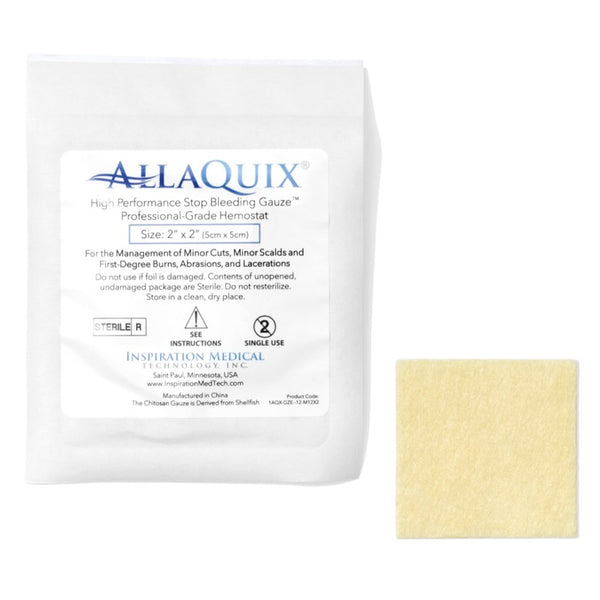
AllaQuix Nose Bleed is an active hemostatic nose plug made from calcium alginate. Instead of absorbing blood and hoping the body finishes the job before the plug is full, it works on the bleed in two ways at once. The calcium helps accelerate clotting, and the alginate absorbs up to 20 times its weight in blood. Athletic trainers have told us this combination is what lets them beat the blood clock: the bleed stops on the first stoppage, the wrestler goes back out, and the plug stays in for the rest of the match. Stop Bleeding Quick Like the Pros™.
The plug is smaller and thinner than the gauze wads many programs are used to, and that is intentional. It is made with Thin-Sorbent™ technology and stays close to its original size as it works, which comes from the reaction between the calcium in the plug and the sodium in blood. It is plant-based and hypoallergenic. When the fibers meet blood they turn into a soft gel, so at the end of the match the plug slides out smooth rather than dragging the clot with it and restarting the bleed.
AllaQuix Nose Bleed is for minor nosebleeds. It is not for severe, heavy, or uncontrolled bleeding, and it does not replace an evaluation by an athletic trainer or physician for a wrestler who took a hard hit to the face.
Try it before the next tournament. Order AllaQuix Nose Bleed or browse the full nosebleed collection. Athletic trainers and coaches who want to test it with their staff first can email Steve at steve@allaquix.com and ask for a sample pack. No pressure at all.
Frequently asked questions
How much blood time does a wrestler get?
Under NFHS high school rules a wrestler gets five minutes of blood time, cumulative across the entire match including overtime. It is separate from injury time. If the bleeding is not controlled within five minutes, the wrestler defaults. Check your state association for current interpretations.
Can a wrestler compete with a nose plug in?
Yes. Wrestlers routinely return to the mat with a nose plug in place once the referee confirms the bleeding has stopped and the blood is cleaned up. A plug that grips the nostril, such as one rolled or inserted wide end first, is less likely to fall out during contact.
Should a wrestler tilt his head back for a nosebleed?
No. Tilting the head back sends blood down the throat, which causes gagging and can prolong the bleed. Sit the wrestler up, tip the head slightly forward, and pinch the soft part of the nose.
How long should you pinch a nose during blood time?
Pinch the soft part of the nose for a full 60 to 90 seconds without releasing to check. Time it with a watch. Releasing early to look is the most common reason a nosebleed restarts during a stoppage.
What is the difference between AllaQuix Nose Bleed and a cotton nose plug?
A cotton or synthetic plug absorbs blood and waits for the body to clot on its own. AllaQuix Nose Bleed is a calcium alginate hemostat that actively helps clotting while absorbing up to 20 times its weight in blood, then turns to a soft gel so it can be removed without disturbing the clot.
Which insertion method holds best for wrestling?
The rolled method, where the plug is turned sideways, rolled into a loose wad, and inserted, has the strongest feedback from wrestling coaches and athletic trainers. Inserting the wide end first is a close second.
When should a wrestler with a nosebleed see a doctor?
A wrestler should be evaluated by an athletic trainer or physician if the bleeding does not stop with pressure and a plug, if it follows a hard blow to the face with swelling or a visibly crooked nose, if there is any sign of concussion, or if nosebleeds are happening often outside of contact.
This article is general information from the makers of AllaQuix® and is not medical advice. Talk to your doctor or another qualified health professional about your own health or medications. For severe, heavy, or uncontrolled bleeding, call 911 or seek emergency care.