
Surgical Incision Healing Stages, Week by Week
The four stages of healing, what's normal each week, what drainage colors mean, and when to call.
Reviewed by Inspiration Medical Technology, Inc. All articles are reviewed for accuracy and brand-voice compliance by the team behind AllaQuix®. Not a substitute for medical advice from your doctor.
The four stages of wound healing
Every incision moves through the same four stages. They overlap, so you won't see a clean line between them.
The stages
- Hemostasis (minutes to hours): blood vessels narrow and a clot seals the incision.
- Inflammation (about days 1 to 4): mild redness, warmth and swelling as the body clears the area. This is normal and expected.
- Proliferation (about day 4 to week 3): new tissue and small blood vessels fill in, the edges knit together, and a thin pink line forms.
- Maturation (week 3 to a year or more): the scar reorganizes and gets flatter, paler and stronger.
A surgical incision healing timeline
Timelines vary with the procedure, the location and your health, but most incisions follow this pattern.
What most people see
- Week 1: tenderness, mild swelling, a little pink or clear fluid early on. Edges look sealed by the end of the week.
- Week 2: the incision is usually dry. Stitches or staples often come out between days 7 and 14. A firm healing ridge under the skin is common.
- Weeks 3 to 6: a pink line, mild itching, and less tenderness. Most people return to normal activity when cleared.
- Months 2 to 12: the scar fades from pink toward the color of your skin and softens.
Drainage: what the colors mean
Looking at the pad at each dressing change is the simplest way to track healing. Note the color and roughly how much there is.
Drainage guide
- Clear or pale yellow and thin: common in the first few days.
- Pink or light red and thin: common in the first few days.
- Bright red that soaks through: press firmly over the dressing and call your surgeon.
- Cloudy, thick, yellow, green or tan, or with a bad smell: a possible sign of infection. Call your surgeon the same day.
Surgical incision leaking after 2 weeks
Most incisions are dry by the end of the second week, so new or increasing drainage after that deserves a call. Possible causes include a seroma (a pocket of clear fluid under the skin), a stitch working its way out, an area of the incision separating, or infection. Only your surgical team can tell which, so don't wait it out.
While you wait to hear back, keep the incision covered with a clean, dry sterile dressing, change it whenever it's damp, and note the color and amount so you can describe it. An island dressing with a non-adherent pad absorbs light to moderate drainage without sticking to the incision.
FOR DRAINING INCISIONS
Island dressings for light to moderate drainage
Highly absorbent, non-adherent pad inside a 1 inch border. Sterile and latex-free.
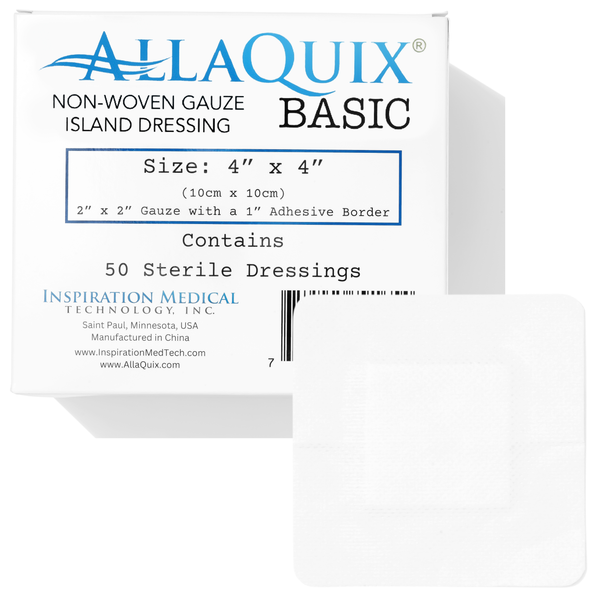
ISLAND DRESSING · 4×4
AllaQuix® Basic Island Dressing 4 × 4
A 2×2 inch non-adherent pad inside a 1 inch adhesive border. Sterile, latex-free and breathable. Box of 50 or a case of 12 boxes.
Best for: incision sites, everyday cuts, light to moderate drainage
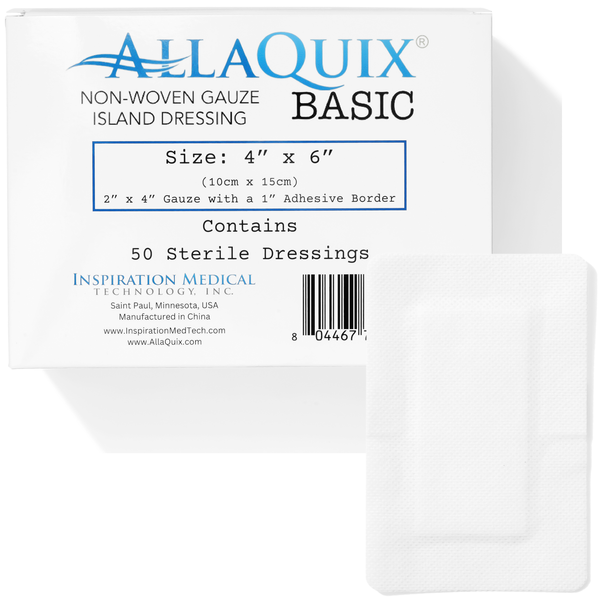
ISLAND DRESSING · 4×6
AllaQuix® Basic Island Dressing 4 × 6
A 2×4 inch pad inside a 1 inch adhesive border, for longer incisions and larger areas. Box of 50 or a case of 12 boxes.
Best for: longer incisions, larger cuts
What helps and what slows healing
You can't rush the stages, but you can avoid slowing them down.
Helps vs. slows
Helps:
- Protein-rich meals and staying hydrated
- Walking as your team allows
- Blood sugar control if you have diabetes
- A clean, dry dressing changed on schedule
Slows:
- Smoking and vaping
- Lifting that pulls on the incision
- Tight waistbands rubbing the incision
- Picking at scabs, glue or strips
- Soaking in a bath, hot tub or pool before you're cleared
When to call your surgeon
Most problems show up between day 3 and day 10, but late drainage can appear after that.
Call your surgical team if you notice
- A fever of 100.4°F (38°C) or higher
- Redness that spreads outward from the incision, or red streaks
- Warmth, swelling or pain that gets worse instead of better
- Cloudy, yellow or green drainage, or a bad smell
- Edges that pull apart or an incision that opens
- Bleeding that soaks through the dressing. Press firmly over the dressing and call.
- New or increasing drainage after the second week
For trouble breathing, chest pain, or bleeding you can't control with pressure, call 911.
FAQ
Common questions on this topic
How long does a surgical incision take to heal?
The surface usually closes in one to two weeks. The tissue underneath keeps strengthening for months, and the scar keeps changing for up to a year or more.
What does a healing incision look like?
Closed edges, a thin pink or red line, mild swelling that eases over the first week, and little or no drainage after the first few days.
Is it normal for an incision to itch?
Yes. Itching is common as new tissue forms. Don't scratch the incision. If itching comes with a rash, blistering or spreading redness, call your team.
Is a hard ridge under my incision normal?
Usually. A firm healing ridge often forms along the incision in the first couple of weeks and softens over months. Call if it grows, turns red, or becomes more painful.
When can I stop covering my incision?
Many incisions can be left uncovered once they're dry and fully closed. Keep them covered while they drain or rub on clothing, and follow your surgeon's instructions.
BE READY
Keep sterile dressings on hand for every stage
General patient education, not medical advice. Always follow your surgeon's instructions. Not for emergency, arterial, or severe bleeding.
Dallas, Texas
FDA reviewed and cleared. Nearly one million AllaQuix® sold.